This is the story of a color – and of the lengths to which people went to discover, obtain, steal and synthesize it.
Amy Butler Greenfield’s A Perfect Red: Empire, Espionage, and the Quest for the Color of Desire spans the globe and history, beginning with the use of red ochre in Neanderthal rites. Mysticism and metaphor are bound up in this color, and more than one condemned aristocrat wore it to their executions.
Yet a bright deep true red was difficult to obtain, and for painters and dyers that made it all the more valuable. The best dye, though, was derived from the cochineal beetle native to what was, at the time, the Aztec Empire.
And so cochineal passed into the equally-reddened hands of the conquistadores, although most of them preferred gold. From then on it became part of a Spanish monopoly on dye, which the British countered with government-authorized piracy and the French with a spy. If you enjoy history, especially the dramatic swashbuckling aspects of history, this book is a great read, but what really kept me hooked was the introduction of science.
The scientists of that time tried to discover what exactly cochineal was – because after cargoes of dried beetles, smaller than peppercorns, had been stolen or intercepted, no one was quite sure what they were. Antony van Leeuwenhoek, who invented the first microscope, initially mistook them for seeds. As science became more advanced, though, dyes were synthesized—possibly the final blow to an industry that had survived warfare and espionage and biopiracy.
As well as being well-researched, this book is highly entertaining, with several chapters ending on cliffhangers. I even checked Amy Butler Greenfield’s website to see if she had written any other books which blended fashion, history, politics and science into such an absorbing read. Maybe a non-fiction version of The Color Purple? I’d buy it.
Since I published through a small press, I'm interested in news about such presses, especially those specializing in the genres I write. Aspen Mountain Press is (or was) a romance e-publisher and small press, and although I've never read any AMP books, they had some very distinctive covers.
AMP was established in 2007, so it seemed capable of lasting the distance. But the first signs of problems began in August 2010. This post on the former head editor's blog tells it all - and it's a nightmarish situation.
The story is a long one, but if you're interested in how a press can go very, very wrong, read this. It's unforgettable. Not to mention tragic, because the senior staff tried incredibly hard to pull the press out of the fire and ultimately even that effort was sabotaged by the owner. Apparently she was too depressed to work more than two hours a day, but well enough to cash checks and use royalty money for her personal expenses.
What puzzled me about some of the comments in the blog post, though, were the authors who had received only one or two royalty payments... but who had six or eight books (they specifically mentioned books, rather than short stories) with AMP. That's a lot of books to submit to a publisher which isn't making regular payments. I hope they manage to get their rights back - difficult at best with a publisher which isn't responding to even certified mail - and find a better home for their books.
On that note, the former senior staff of AMP set up another press called Musa Publishing. Although it may be better if writers wait and see how this press does in the long run, Musa has the same great cover artist and a good contract as well.
After the ordeal that was AMP, its writers and editors alike deserve a happy ending.
Edited to add : There's a Part 2 to the story. Authors who received their letters of rights reversion in the mail are still seeing their books offered for sale on AMP's website. The wheels have really come off the bus there.
I have no idea when or how this will end, but at least spreading the news will mean fewer people buying books that are being illegally sold, books for which the writers are not being paid.
I once said that the two most challenging disciplines in Medical Laboratory Sciences, for me, were the ones beginning with H. So it’s a good thing I’m getting these over with at the start—and Histology actually wasn’t that bad. The first week of Hematology has left me feeling a little wiped out, though.
Hematology is the study of blood, which is partly why there’s so much more of a workload in this particular lab. Not everyone gets biopsies or Pap smears done, but everyone has blood tests. As a result, techs work around the clock. I’ve been on the seven-to-three shift, but that’s fine for a morning person like me.
For the first week I helped run the analyzer. That does the work of testing the specimens; what the technologists do is to interpret the results. Which ones are significant? Are they consistent with the patient’s previous results? What follow-up work needs to be done? Can a result be released if the analyzer has flagged it? When do we need to call in critical values?
And all these decisions need to be made in seconds. At first I didn’t know how the technologists managed to do that so fast—especially given that the screens are full of information—but towards the end of the week I was getting a little better at it. I also set up further tests with the blood and did all right. Though there seems to be a real scarcity of chairs in the heme lab, so I usually trudged home with aching feet.
On the other hand, I found out that the technologists like to get normal samples to use for comparison purposes, and will give student a meal voucher in exchange for some. And as you guys know, I adore freebies. So I let them take my blood and they let me run it on the analyzer, which was very cool. The technologists also proclaimed me “disgustingly healthy” after seeing the printout, so they might be tapping me like a maple tree in the future.
Next week I’ll be in Coagulation, monitoring all the ways things can go wrong with the intricate systems of blood clotting. That’s OK, but I also found out that the certifying exam I have to take in February will cost $499. See why I love freebies?
A year or so ago I signed up for Thomas Nelson’s book blogger program (called BookSneeze), and now I request occasional copies of their books to review. The books arrive quickly, there are no obligations to give a positive review and I’ve come across more than one keeper this way.
But a few days ago, the BookSneeze team sent me an email titled “An Exciting Offer from Our Friends at WestBow Press”.
Houston, we may have a problem. WestBow Press is Thomas Nelson’s vanity-publishing arm, and made it to the top position in my list of the most expensive ways to be printed. So I thought they were offering me a chance to see my work in print for $999 and up.
Wrong.
Use your blog to earn revenue and guide Christian writers. As a BookSneeze® Blogger, you are passionate about books.
But as a writer, I’m passionate about writers being paid for their hard work.
The WestBow Press Affiliate Program rewards influential bloggers like you with $100 for every referral you make, once that referral publishes their book.
…
Well, obviously they’ve never read my blog.
I’m fine with earning a little through my blog. Although I draw the line at Google ads and any content over which I have no say, I’m an Amazon affiliate and promote Swag Bucks here as well. On the other hand, that’s because I use both Amazon and Swag Bucks myself, and like the services they provide.
But there’s no way in hell I could promote WestBow Press as a good thing when writers will be $999 poorer right off the bat. Even the ten free paperbacks they get with the cheapest package aren’t entirely free. According to WestBow, “Packages include the cost of the free books, but you’re responsible to pay the cost of shipping and handling.”
Why doesn’t the email suggest I refer writers to Thomas Nelson? Wouldn’t that be a better choice for writers than a vanity press asking for a grand at the very least?
Use your blogging influence to empower others, and earn something for yourself in return. Since there's no added cost or effort required on your part, every published referral is pure profit for you.
I’m not interested in being a Judas goat for any amount of profit.
Other bloggers, especially if they aren’t aware of WestBow’s exorbitant prices, may well sign up for this. But I also hope this attempt to get referrals indicates that vanity presses are feeling the pinch as more and more writers resort to affordable self-publishing instead.
Writer Beware is a watchdog group which collects information on the publishing industry and on literary scams. Its founders, Ann C. Crispin and Victoria Strauss, are multi-published authors as well as being honest and helpful to other writers - and I'm speaking from experience there.
So of course the scammers try to discredit what they say. Normally such bad-mouthing is best ignored, but when I read Writer Beware's latest blog post, a follow-up seemed called for.
Because there's a hate group calling itself "The Write Agenda", and it's called for a boycott of books from anyone who criticizes it. Or criticizes scams, in general. Perhaps that's why I'm on the list too. At least I'm in good company.
I'm not sure what this list is supposed to achieve. Maybe if "The Write Agenda" was a huge group of librarians, booksellers, etc. it would have some effect, but right now it's an anonymous person or persons who can't seem to do more than conduct a half-assed smear campaign. Despite its many claims, websites and sockpuppets, "The Write Agenda" doesn't seem to attract much support (its Facebook page, for instance, has 32 likes).
Anyway, if I were that easily intimidated I would never have left the Middle East.
Not that that's all, though. According to another writer, "The Write Agenda" posted one-star reviews of its critics' books on Goodreads, though these have now been removed. And "The Write Agenda" also wants to burn its critics' books, so they're soliciting donations.
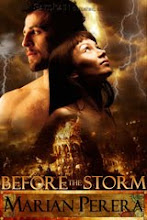
Sadly, they don't have a Photoshopped picture of a collection bin with my name on it, but maybe they'll buy a few copies of Before the Storm anyway. If anyone's doing a Fahrenheit 451 on the books of people who tell the truth about scams, I don't want to be left out. And if money's tight, "The Write Agenda" can always get e-copies. Tweet
Friday was my last day in the Histology department at the Hospital for Sick Children.
Now that rotation is over and I miss it a little, even though Histology was my least favorite aspect of medical laboratory technology. I always felt as though I was memorizing facts about it (a lot of facts) without ever really enjoying the material or the lab work the way I enjoy microbiology.
Worse, after each semester I would promptly forget everything I had studied, meaning the entire process had to be repeated for the next set of exams. Which was kind of depressing.
But the rotation helped a lot. Histology still isn't the most fun I've ever had in a laboratory (that would be the time I had to check on a bacterial culture at a quarter to midnight, so the guy I was dating came with me, and to this day I don't remember if the bacteria were all right). But anyway. When you spend all day working in one field, it's much easier to become proficient in it, and the rotation drew everything together so that all the facts I'd memorized made a lot more sense.
And then I got to see an autopsy.
I've read a lot of Patricia Cornwell's novels - Post-Mortem, Body of Evidence, etc - but seeing the autopsy for myself was... different, to say the least. No description can recreate the sharp smell of formalin, the sweat on your forehead, the sound of connective tissue tearing away, the squishy slippery feel of internal organs. I wasn't sure I would bear up beforehand, but it was all right as long as I didn't look at the face, hands or feet.
Staring at the torso made it easier to think of the anatomy diagrams in my textbook instead. I won't ever want to perform autopsies, but this one was an unforgettable experience.
Finally, on Friday I got a new lab coat because the old one was covered with colorful spots and blotches from all the tissue-staining we'd done during the week. And on Monday I start in Hematology.
I read Rumer Godden's Miss Happiness & Miss Flower when I was nine and loved it, but my copy was lost in transit somewhere between Texas and Dubai. So it stayed on my to-buy list for years, until the book finally came back into print and I paid for another copy with Swag Bucks (affiliate link). Free books rock.
Well, free good books.
But I'm going to hold off on buying any more until it's time for Christmas shopping, and start stockpiling Amazon gift cards instead. Swag Bucks is a good way to earn these, and if you sign up now, you can earn an additional 70 SB by entering the code BIGTIMEBUCKS (which along with the signup bonus means you'd start out with 100 SB). The code is active now and is good until 11:59pm PT tomorrow.
There's also going to be a Swag Code Extravaganza tomorrow, though I'll be starting my next rotation - in Hematology - and will miss most of the fun. Basically, there'll be several codes given out by Swag Bucks throughout the day, meaning 60 additional SB. The first one will be on the Swagbucks Twitter feed at 6:00am PT. This is an easy way to get a few additional bucks.
And if you're signing up, please consider using my referral code. :)
Stephen Mansfield’s previous books include The Faith of George W. Bush and The Faith of Barack Obama, but this book is not called The Faith of Oprah Winfrey. Because from his point of view, she’s got the wrong faith.
Therefore it’s called Where Has Oprah Taken Us?: The Religious Influence of the World's Most Famous Woman. Partly an examination of Winfrey’s life from an evangelical Christian perspective, and partly a commentary on the effects of religions in America, it made me curious. I haven’t watched a single episode of The Oprah Winfrey Show, and I didn’t know much about her except that she was in The Color Purple.
One review copy later, courtesy of Thomas Nelson’s Booksneeze Program, and I settled down to find out.
The start of the book is gripping. Winfrey was born in circumstances that were challenging to say the least—her unmarried mother was a maid, and this was rural Mississippi in the 1950s. Her adolescence was marked by a pregnancy at fourteen, the baby dying a month after birth.
Yet she never stopped believing that she had “a higher calling”. And when she was hired by the local CBS affiliate to become the first black female anchor in Nashville history, she capitalized on her talents—intelligence, an ability to connect with people and an innate strength.
During one early assignment, Oprah introduced herself to a shopkeeper and offered her hand. “We don’t shake hands with niggers down here,” the man angrily retorted. “I’ll bet the niggers are glad,” she fired back, unflinching.
In her twenties, though, the religion she’d been taught in the Baptist church she attended no longer satisfied her. Years later, though, as she struggled to reinvent her show, she embraced spirituality and endorsed the careers of many New Age mystics with the Winfrey rubberstamp.
That’s where the book stopped being interesting. After that point it’s no longer a biography, albeit a biased one—instead, it’s an attempt to counter Winfrey’s beliefs with Mansfield’s beliefs. Italics set his more evangelical commentaries apart from the rest of the book, so readers who don’t already agree with this perspective know what they can avoid.
I read them all, though, and found Mansfield’s views as unrealistic as he clearly finds those of Deepak Chopra. In his world, all humans need gods to tell them what to do. Minus the god, he believes we either worship myths or ourselves—or in Winfrey’s case, combine the two by elevating oneself to mythical status.
And while her dreams (especially with regard to the film Beloved) may sometimes cross the line between ambitious and inflated, I’m not sure that Mansfield’s perspective is any better. He describes humans as “servants” and “subjects” who “do not create themselves or their destinies by thoughts or mantras or anything else” (pg 178). If Winfrey had believed that she could not influence her own future with her hard work and talent, where would she be today?
Then again, Mansfield displays a consistent fear of other people’s independence, especially their mental freedom of thought. One of his chief criticisms about Winfrey is that she picks and chooses what is meaningful to her from the beliefs of various religions. Another is that she leads us into temptation—specifically, that she uses her power and influence to foist New Age mysticism on people.
Jesus said something about eyes and planks which may be relevant here.
So where has Oprah taken us? I finished this book unconvinced that she was contributing to the downward spiral of America, mostly because there was no evidence that her religion—whatever it is—was doing anything to people that Mansfield’s hasn’t done as well. Though the book does include fictionalized accounts of how Oprah viewers “Jenny” and “Tina” became dissatisfied with Christianity or with their lives as a result of absorbing Winfrey’s endorsements of New Age gurus. And after reading those stories, I think Mansfield should try writing non-fiction instead.
Monetary systems in fantasy often fall into the gold/silver/copper lines. Partly because this is familiar and partly because it’s easier for readers to remember than, say, platinum/steel/tin.
Usually, the variations come in what the different types of coins are called. In Westeros, the world of George R. R. Martin’s A Song of Ice and Fire, gold coins are dragons and silver coins are stags – an interesting tip of the head to the political system, where the previous (dead) king’s symbol was a dragon, and the current king’s sigil is a stag.
In China Mieville’s world of Bas-Lag, people use shekels as currency, which I liked a lot because it reminded me of the ancient Middle East. Jack Vance’s world of Tschai is even more imaginative, though, since people there use sequins.
Sequins, on Tschai, are small colored gemstone-like objects that grow in nodes that bud unpredictably from the ground. Nodes can produce over a hundred sequins, which all start off clear, but take time to ripen to their final colors of scarlet and purple (passing through white, blue, green, etc. along the way). This sets the system in place – the clears are almost worthless while the purples are the most valuable.
So fortune-hunters on Tschai look for nodes. Needless to say, there’s an area where nodes do grow in some quantity, and it’s a hunting province patrolled by the vicious aliens called the Dirdir.
In our own past, people have used cowrie shells and salt as currency (the word “salary” derives from “salt”). Theoretically, money can be made of anything, as long as people can’t easily reproduce or damage it – coins made of glass would be unfeasible. It should also be in a form that can be readily transported and transferred.
Only in modern times has money been digital, existing as information passed from one computer network to another. I’ve thought and thought, but there seems to be no way to translate this to a fantasy world, without first setting up a banking system and teaching people finance. Until then, characters will just have to carry around their shekels, sequins, stags and so on.
I haven’t read this book yet, but it’s going on the list. Last Suppers: Famous Final Meals from Death Row, by Ty Treadwell and Michelle Vernon, not only describes what condemned prisoners last ate, but includes jailhouse recipes.
That would make for an interesting dinner-table conversation. “This soup is delicious.” “Why, thank you. It’s based on the Alcatraz recipe – with a dash of fish sauce for that Hanoi Hilton flavor!”
But for those of us who aren’t into cooking for large numbers of hungry felons, there’s still a lot to enjoy. James Smith requested a lump of dirt, which he didn’t get. Maybe the prison yard dirt was just too gravelly for him. And Victor Feguer asked for a single olive, unpitted. He probably got that.
David Castillo, though, went to the opposite extreme and ordered “24 tacos, 2 cheeseburgers, 2 whole onions, 5 jalapeno peppers, 6 enchiladas, 6 tostadas, one quart of milk and one chocolate milkshake”. I’m thinking that after such a meal, prison officials might as well have sat back and waited for his cholesterol levels to kill him.
Entertaining though this is, the authors never let you forget that the people in question committed despicable crimes – each section has at least a one-line mention of the condemned prisoner’s murders. I won’t say you need a strong stomach (no pun intended) but it’s not entirely light-hearted either.
Which got me to thinking about my own last meal. No contest, really. I’d want a full Sri Lankan spread – rice, chicken curry, murrunga (drumstick curry), mallung (chopped greens), mango chutney, poppadums and coconut sambol hot enough to cause spontaneous weeping six feet away, washed down with a glass of sweet coconut water. The only thing I’d decline would be a banana leaf platter. I am somewhat Westernized.



 spans the globe and history, beginning with the use of red ochre in Neanderthal rites. Mysticism and metaphor are bound up in this color, and more than one condemned aristocrat wore it to their executions.


 anyway. If anyone's doing a Fahrenheit 451 on the books of people who tell the truth about scams, I don't want to be left out. And if money's tight, "The Write Agenda" can always get e-copies.
 when I was nine and loved it, but my copy was lost in transit somewhere between Texas and Dubai. So it stayed on my to-buy list for years, until the book finally came back into print and I paid for another copy with
 . Partly an examination of Winfrey’s life from an evangelical Christian perspective, and partly a commentary on the effects of religions in America, it made me curious. I haven’t watched a single episode of The Oprah Winfrey Show, and I didn’t know much about her except that she was in The Color Purple.

 , by Ty Treadwell and Michelle Vernon, not only describes what condemned prisoners last ate, but includes jailhouse recipes.