Showing posts with label characters. Show all posts

Monday, February 9, 2015

My thoughts on genderswapping


On the Absolute Write forums, people have occasionally suggested genderswapping if the story needs more female characters, or if the story needs to be shaken up and viewed in a different way. Though in one particular discussion, people expressed opinions I didn’t agree with.

When a character can work as both a man or women, and be equally compelling either way, that character is probably a damn good character ... a character that happens to be human first, and male/female second.

I can think of any numbers of characters who wouldn’t work if they were completely gender-neutral, and who are still damn good characters. Try making Scarlett O’Hara a sixteen-year-old boy pining for a lady who went off to fight at Gettysburg. Or Tom Robinson a black woman accused of raping a white man.

I don't understand how you can't switch the genders, I really can't. I mean, does the male character constantly check out the females? Are they in the the army or something, are they gruff, do they curse, etc? How wouldn't that work for a woman?

How wouldn’t that work for a woman? I don’t know, I get the impression there weren’t that many women working on Lord Nelson’s flagship or standing guard in a Roman army camp.

It’s not easy to have women playing significant roles under certain circumstances. It can certainly be done, because as Kameron Hurley’s brilliant essay points out, women have fought throughout history. Returning to my original home, there was a corps of female Tamil guerillas in the LTTE.

But some armies were, on the face of it at least, all-male. If some of those soldiers were women in disguise, the story should show how they manage to pass as male during the weeks they spend in, say, the cramped quarters of a German U-boat. Genderswapping after the story is written could involve significant changes to the narrative (readers are likely to expect the character’s secret to be revealed in time, and to have consequences).

Here’s another thing that will only work for women: getting pregnant. Outside of the speculative fiction genres, pregnancy as a plot twist just won’t work for men. I recently submitted a manuscript where, in Victorian England, the antagonist seduced and impregnated the hero’s fiancée.

Genderswap this. The heroine’s intended was seduced by another woman who now claims to be pregnant. The first question out of the heroine’s mouth will be : how do we even know there is a child, and it’s yours? Plus, there just wasn’t that much of an emphasis on men remaining virgins at that time.

A real or fictional society that has gender differences or bias usually means that the author has taken into account the genders of the characters when writing the story. It’s not as though these were picked by the toss of a coin, such that they can be easily swapped later.

I have a Christmas story coming out from Samhain later this year, where a man living alone opens his door on a freezing night to find a near-naked woman outside. She has an unconvincing story for how she got there, but he lets her stay overnight.

Genderswap this, and a woman who’s living alone will have to let a strange, near-naked man spend the night in her house. I’d be surprised if the possibility of assault didn’t occur to her, putting a damper on the romance.

Makes me wonder if they people who can't gender switch just haven't met enough people or their cultural gender roles are so inundated that they can't separate it from the person.

Or maybe they’re telling a different kind of story from the one you want, which is not in and of itself a bad thing.

Try genderswapping the characters in a Harlequin Presents story and see if Harlequin still wants it. I’ve never read Harlequin Presents, but a lot of readers love the rich sexy alpha males in this imprint’s books.

Ditto for some mainstream romances. I think a romance between a tough, sociopathic female assassin who saves a nervous, clueless, sexually inexperienced man could find a market… but it would be smaller than the number of readers who enjoyed the reverse. I’ll go so far as to say that a mainstream publisher will want the man to be able to hold his own at least sexually, whereas it’s not such a problem if the woman can’t.

This isn’t a matter of the authors not being experienced enough to write differently, or having very traditional gender roles in mind. It’s a matter of them writing to the market, and if that’s what they want to do, it’s their choice. Though it’s great when authors challenge the expectations of that market, as Courtney Milan does in her historicals, but I also think such envelope-pushing has to be done with care. Ditto for genderswapping.

So to summarize…

Genderswapping is like any other tool in an author’s repertoire. No tool works for every situation at every time. There are some stories which will benefit from changing the characters’ genders, and others which won’t, and it’s up to the individual author to know the difference.


Friday, February 6, 2015

Five kinds of atheistic characters I won't read about


1. Atheist is morally bankrupt

Sometimes the authors aren’t even trying to make a sheep-vs-goats statement here. They just think it would be dramatic to write:

“He arrived at the harbor late, but his cargo of uncut heroin and underaged prostitutes was nowhere in sight. Had something happened? Vladimir Khorupt was an atheist, but he found himself praying.”

I’ve never seen it the other way around, though : “Because she was an atheist and didn’t believe in an afterlife, Jacey Summers did her best to help people in this one.” So if the book isn’t intended to make any kind of moral judgment, either play fair or leave off the mentions of religion/lack thereof.

2. Atheist is bitter or miserable

There’s a Graham Masterton book I put down because one of the characters, Dean, is an unpleasant misanthrope described as an atheist. The others call him Mean Dean, just to drive home what a nasty piece of work he is.

IMO, if such a character went down on his knees and embraced Islam this minute, he’d still be as pleasant as fingernails on a chalkboard. Except then he’d also think women should cover up. It has nothing to do with whether or not he’s religious, in other words. Unbelievers can enjoy life too.

3. Atheist became that way after a tragedy

The stereotype of an atheist is someone who believed in God until he lost a loved one. At this point he fell to his knees, screamed “NOOOOO!” at the uncaring sky, and became Darth Vader.

How popular is this stereotype? Well, after my mother died, an (extremely religious) friend of hers called up to ask me to go to church with her. No thank you, I said, because I’m an atheist. Shocked, she told me I shouldn’t allow my mother’s death to harden my heart. That was 2004, and I’d deconverted in 1999.

It was hardly a dramatic event, either, because I just read a lot before it happened. No screaming involved, at the sky or at anything else.

4. Atheist is the subject of a punish-the-protagonist story

I genuinely hate these, and although I might try the occasional inspirational novel, I stay away from any that might have this plot. Unfortunately it can crop up stealthily elsewhere.

In Dean Koontz’s short story “Twilight of the Dawn”, an early hint of the author’s detour into conservative preaching, the main character is so hardcore he tells his son there’s no Santa Claus. For this, he must be made to pay, so both his wife and son die, with the son praying for him until the end. And the main character keeps suffering until he repents of his evil ways and decides there’s a loving God after all.

I might not mind a well-written conversion story where the atheist researches a religion he’s curious about, and we see why this religion works for him and is a rewarding addition to his life. But I’m not interested in conversion-through-misery, which rings about as true as deconversion-through-tragedy.

5. Atheist is superior to everyone else

This is the rarest of the subspecies, but I thought Darwin Minor, the hero of Dan Simmons’ Darwin's Blade, fitted it. As well as having a physics degree and a background as a sniper in Vietnam, he’s a brilliant chess player and an incredibly well-read investigator, so he can outfight, outshoot and outthink anyone. It’s like the Terminator and Sheldon Cooper had a baby together.

I don’t find this kind of character offensive, unless the story turns into a tract, but at the same time I’d much prefer even-handed treatment. In real life, religious beliefs are no guarantee of morality any more than atheism is an sign of genius. If these are used in fiction as shortcuts, there are much better ways to show personality.

And if these are ways readers can predict what will happen to the characters, all I can say is, I’m avoiding those stories.

Thursday, January 8, 2015

First impressions of heroes


Among the many warnings in How Not to Write a Novel is that the first thing the character does shouldn’t be off-putting (e.g. ogling a stranger, going to the bathroom) unless the author wants that impression of the character to be firmly fixed in the reader’s mind.

That was made clear in a couple of romances I critiqued recently. In one, the hero was at an extremely low ebb at the start—depressed, lonely and drunk. In another, the hero was much younger than the heroine, to the point where I thought he was about ten years old. When he noticed her breasts, it was a massive turn-off.

Romance revolves on the hero. He doesn’t have to be a former SEAL billionaire who now runs a BDSM club when he isn’t racing with his biker buddies. But he does have to be someone readers can find attractive or interesting.

Some of the keepers on my romance shelf have unconventional heroes. A mortician. A near-sociopathic assassin. A man who’s developmentally disabled. But all of them were assertive in their different ways, able to hold their own among their peers. Even if they were younger than the heroine, or less intelligent, they didn’t give me the impression of being weak and powerless.

So what’s to be done, if the story begins with the hero helpless or broken in some way?

Change the start

In one of my keepers, Pamela Morsi’s Wild Oats, the first time Jedwin Sparrow sees Cora Briggs, he’s perhaps fourteen or fifteen, while she’s twenty—not just a mature woman, but a divorcee. He’s intensely aroused both by her reputation (or lack thereof) and her beauty.

But if the story had started with a teenager getting an erection over an older woman, it would have reminded me of Mary Kay Letourneau. I might not have read further.

Instead, though, the story begins ten years later, when he’s an adult and a professional man, making enough money to offer Mrs. Briggs an indecent proposal. Although he’s younger and less experienced than she is, they’re on a much more equal footing from the start, because he knows what he wants and is going after it, rather than being a tongue-tied, sweaty schoolboy. That flashback comes later, once the first impression of him is clearly cemented.

Make it clear he’s more than the sum of his problems

This was an issue in the story where the hero was drunk and depressed at the start. There wasn’t much to his personality other than “sad boozer”.

Whereas there are tons of romances which begin with a hero in jail or in an asylum or chained to an oar as a galley slave (I’m guessing here), and which are great reads because the hero is intriguing. He doesn’t have to be innocent of the crime which landed him in prison, and he can be in Bedlam for what people of that time thought were good reasons (e.g. Summer Devon’s and Bonnie Dee’s The Gentleman's Madness).

But if he’s strong and intelligent, and if he fights back in even a small way, that will be part of the readers’ first impression too. And believe me, a lot of people love a Hurt-Comfort read. They just need to know that your Hurt hero is worth Comforting. :)


Sunday, December 7, 2014

How to make passive characters work


Someone on the Absolute Write forums asked why so many readers dislike passive characters, characters who need some time and effort to find their own strength. That made me think about active vs. passive characters, and what makes them work.

1. Genre

It’s going to be very difficult to sell a science fiction novel where the main storyline features a cyborg who thinks a lot about the meaning of life. He can philosophize about the ramifications of melding man with machine until the spacecows come home. But readers of science fiction will be bored, and readers of literary fiction (who might be more open to in-depth character studies) will never have picked up the book in the first place, because if they see “cyborg”, they’re going to assume it’s an action-oriented story.

2. Other aspects of the story

There’s one fantasy novel which features an extremely passive heroine, and that’s Stephen Donaldson’s The Mirror of Her Dreams. But I enjoyed other aspects of the story, like the mirror magic, and there were plenty of active characters to balance the heroine out. Plus, there was more of a plot than just Terisa sitting around trying to summon up the courage to do something.

Her passivity also descended into an unusual neurosis: she wasn’t even certain she existed, so she had mirrors all over her apartment. In them, she could see her reflection and know she was still there. That was odd enough to keep me reading until the fantasy part of the tale kicked in.

Likewise, both Rebecca and Wide Sargasso Sea feature heroines who are often passive. But the riveting or evocative parts of the books balanced out the protagonists’ helplessness. There was more to the stories than “this is how Heroine thought about making a change for 300 pages and then finally did it”.

3. Level of passivity.

What’s Melanie’s first spoken dialogue in Gone with the Wind? She says to the man she’s going to marry:

“I fear I cannot agree with you about Mr. Thackeray’s works. He is a cynic. I fear he is not the gentleman Mr. Dickens is.”

Melanie is shy and polite, self-effacing and traditional. But in that moment, she also shows she’s intelligent and has no qualms about disagreeing with a man—her future husband—when it comes to something she feels strongly about. Because of that, I never thought of her as weak, even when she was contrasted with Scarlett’s strength.

A protagonist doesn’t have to be bouncing off the walls Matrix-style to struggle against an antagonist. Paul Sheldon in Misery certainly couldn’t; he was too badly injured. But he found other, subtle ways to fight back, so when he stole a hairpin to pick the lock, that was a great moment.

If he had resigned himself to his fate, or waited wistfully for someone to save him, he’d have been boring to me.

A protagonist needs to make choices, and those choices need to affect the plot.

4. Real life

Sometimes, the writer’s reason for making the character passive is because there are very passive people in real life. For instance, a woman who stays with a man who uses her, because she’s not sure whether she should leave and is scared to be on her own. That’s realistic, right?

Sure, but is it interesting? There are people in real life who spend all day playing computer games or shooting heroin, and I wouldn't want to read about them in fiction. The computer games would be boring and the heroin would be depressing.

That said, I’m the kind of reader who prefers active characters on the whole. There are a lot of readers who don’t, so it’s also a matter of finding your target market. SF fans who want to read about a cyborg contemplating his robo-navel—probably not. Literary fiction fans who want to read about a woman gradually realizing why she’s unhappy in her marriage and what she can do about it? That’s more likely.

Tuesday, October 7, 2014

Always Chaotic Evil protagonists


This isn’t a main character who’s a loveable rogue, or a sexy bad boy, or a tortured hero, or an anti-hero, or someone due for a redemption arc.

This is an evil protagonist. Completely and irredeemably evil, with no positive qualities whatsoever. So the story is about all the loathsome things he does.

I’ve come across two such manuscripts being offered for critiques, and they were… interesting. But that’s interesting to discuss, rather than to read. In both cases, I was so turned off by the protagonists’ amorality, casual murders, sexist attitudes and cowardice that I couldn’t read much further.

“The characters are supposed to be hateful,” the writers said in explanation.

Which is all very well, but hateful =/= interesting.

It’s certainly unusual to have the main character be a psychopath. It might even be edgy and dramatic, because some readers will be hooked by a character who tramples on all of society’s rules, who rapes and murders her way through the land without anything so cumbersome as a conscience.

The question is whether there’s enough of a line attached to that hook. If the character doesn’t have a solid, interesting goal, then the story might come off as gore porn. If the character isn’t smart enough to see the consequences of openly killing people (because intelligence is a positive quality, and she can’t have any of those), then the story's likely to end soon unless other characters take on the responsibility of protecting the psycho.

“Well, yes, he’s stupid on top of being self-centered and cruel,” the writers said. “But that means readers will be eager to find out how he's defeated in the end. He’s like Joffrey!”

I think one reason Joffrey never got a POV of his own was because he didn’t even have the fig leaf of enough sense to consider the consequences of his actions. It would have been difficult if not impossible for him to carry the story on his own.

And I've read books where I wanted the main character to fail - The Day of the Jackal was the first of these - but the MC usually had some quality that made them interesting (and I don't mean qualities like sadism and stupidity). The Jackal was extremely smart, competent and fearless. Hannibal Lecter was brilliant and sophisticated and had his own moral code, such as it was.

Another problem with characters who are Always Chaotic Evil is that they’re predictable. If you always know how a perfect saint will act in any given situation, then you also know exactly what a sadistic coward who hates women will do. This rarely makes for a engrossing experience.

Finally, if these characters are meant to be frightening—for me, personally, they aren’t, because they’re usually so over-the-top in their vileness that I find them difficult to take seriously. Whereas if the evil character has even a spark of humanity, one point of contact, it can make him much deeper and more disturbing. One of my favorite moments in Misery was when Paul saw what Annie might have been if she wasn’t murderously insane. In other words, he recognized that spark of humanity.

It didn’t make him any less determined to get away from her. But it did make her something more than just her madness.

Likewise, one improvement that Game of Thrones (the TV show) made to the books was to have Ramsay Snow Bolton eager for his father's approval. I still want him to die. But I can understand him, and I find him much more interesting than I ever found Joffrey. It also helps that he's smart in his own way - he'd be hopeless as the public face of House Bolton, but he's clever enough to make his own gains on the side.

There's room in fiction for characters who are roast evil with stupid sauce on the side, but if they're to take center stage and carry the story, they need more than just that to go on.

Friday, September 19, 2014

Foodskin descriptions


In a sample of a book on Amazon, I read that a character had “mocha skin”.

This didn’t make me close the window. I’m brown-skinned, but I don’t feel offended by these kinds of descriptions. But it did make a change in the way I was reading the book. Suddenly the enjoyment level had lowered, and instead I was alert for any further such descriptions.

Sure enough, there it was again. The second character with “mocha skin”. And at that point, I stopped reading.

I thought about this, and realized why foodskin descriptions don’t work for me.

1. They’re cliched.

Chocolate, caramel, mocha, coffee, cinnamon, hazelnut. Chances are, the description is going to involve one of these. I’m guessing if someone has Nutella skin, since this is both chocolate and hazelnut, it means this person has TWO brown parents.

The worst is from a blurb I once read:

…all he could think about was her long, slender, mocha colored legs wrapped high around his cream colored hips.

“Maybe they’ll have a frappucino colored baby,” I thought.

So if a book hits a note I’ve heard once too often, I’m going to subconsciously wonder if there are other tired, stale descriptions. This isn’t a frame of mind that lends itself to enjoying a story.

That said, if the book is amazing, I can overlook flaws. I love Gone with the Wind despite the portrayals of black people. But if an author hasn’t written the Great American Novel, it’s safer to correct mistakes.

2. They give me the impression the author is uncomfortable with the words “brown” or “black”.

This impression may be completely off. But it’s still what I come away with. These are disturbing words and therefore they need to be prettied up, or expressed in terms of synonyms.

I’m brown-skinned. I think of my skin as brown. It doesn’t offend me at all to be called brown. No need to reach for “tea” or “coconut” or “demerara sugar”. Just call me brown.

Brown.

One writer said the reason she repeated “chocolate skin” was to emphasize to the readers that these characters were people of color. That was an admirable intention, but unfortunately it’s likely to turn off readers who are tired of such descriptions (or who notice that it’s never applied to white characters). Plus, if certain readers are determined to see characters as white-with-a-tan, then whatever you say doesn’t matter.

So you could find some less cliched description. Coppery or earth-dark skin sounds attractive to me, without the overuse/fetishizing factor of food.

Or just say black or brown.

Image from Creative Commons

Tuesday, March 6, 2012

Starting with trauma


Fun activity: outlining a new manuscript.
Problem: characterization – specifically, of the hero, Flecton Burwood.

I had a bit of a backstory for him. What I didn’t have was a good grasp of how he thought, what flaws he had, or what he liked about the heroine. Then I asked myself a question.

Hey, Marian, I said. If, from the ages of eight to thirteen, you lived in fear that your charming older cousin would secretly kill you, what would you be like now?

This was the most important part of Flecton’s backstory, by the way. When he was eight, his twelve-year-old cousin Leighton came to live in Burwood Hall. Flecton had two sisters, so he was happy to finally get what he thought would be a big brother.

Leighton was happy too. He wanted to be the master of Burwood Hall, and the only thing standing in his way was the heir.

The first accident killed one of Flecton’s sisters and put him on his guard, but Leighton was too clever and too patient to be caught. After the second accident and Flecton’s narrow escape, he accused Leighton, only to be punished by his parents for telling such horrible lies. This only ended when his father died (of natural causes) when Flecton was thirteen. He became the master of Burwood Hall, and Leighton lost no time in heading for the hills before anything could happen to him.

So getting back to my question, what would I be like if I were Flecton?

Cagey. I wouldn’t trust anyone easily. I’d sleep with a weapon in the room. I’d be over-prepared for danger. I would double-check doors to make certain they were locked.

I’d also have some less rational habits. Like having some kind of weird little ritual to remember the past or protect myself, something that really doesn’t make sense to an outsider or looks bizarre but which kept me more or less sane when I was a child.

I would find it difficult to enjoy life. I might have few qualms about listening to private conversations because hey, maybe that once saved my life when I was a kid. Also, because I didn’t know whether I would live out the day as a child, I’d be even more of a control freak than I currently am.

Suddenly I had a lot of material about Flecton. Plus, now I really want to give him a happy ending.

Starting with a major trauma and extrapolating how that might affect someone will only work for some characters, and they’ll need traits or habits that are not caused or influenced by the trauma, or else they’ll look pretty one-note. But it worked for Flecton, especially since the heroine is direct, well-balanced and can enjoy life.

Too bad he sees her making out with his cousin…

Thursday, January 5, 2012

Characters whom everyone loves


Recently I read Kathleen E. Woodiwiss’s The Flame and the Flower, one of the grand old novels of the romance genre. One reason I didn’t enjoy it was the near-universal adoration of the heroine by the other characters, and that made me think of characters loved by everyone.

1. Give them a reason for this.

If it’s not obvious to the readers why so many people love this character, it’s going to be difficult for them to share the feeling. Worse, it’s likely to turn them off. In real life, people who are very obviously beautiful have their admirers, but they may also have detractors or people who just don’t like them, and that’s not necessarily a bad thing.

In fiction, a character will need more than stunning good looks, given that paragraphs of description are likely to be ineffective unless very well written. So such characters should have other qualities, traits, goals or backstories that show why they’re so well liked.

That was something I enjoyed about Richard Adams’s The Girl in a Swing. The narrator marries a woman called Karin, despite knowing nothing about her past, and it’s made clear throughout the story that people find her extremely attractive. But it wasn’t until my second read of the novel that I realized Adams never actually said what Karin looked like. He mentions her clothes, but not her hair or height or the color of her eyes.

So she’s as much of an enigma physically as she is in other ways, but that technique puts the focus on her charming mannerisms, dialogue and actions rather than her looks, and it works very well.

2. Consider not making them the protagonist.

It’s easier to like characters who are near-perfect when they play a secondary role. Gone with the Wind probably wouldn’t have been so popular if Melanie rather than Scarlett had been the heroine, and taking such a paragon out of the spotlight nearly always makes them easier to like.

In Orson Scott Card’s Hart's Hope, the Flower Princess is described as the most beautiful woman in the world because she has never told a lie, meaning she’s both morally and physically perfect. People everywhere love her. But she’s not the main character, and she loses her bridegroom, her position, her freedom and her beauty in one day, making her sympathetic rather than saccharine.

3. Don’t make it a moral yardstick.

If all the good characters love the heroine and all the villains hate her (or are jealous of her, or lust unrequitedly after her), she’s going to come off as a Mary Sue. The other characters’ feelings toward the protagonist shouldn’t be a sign of their moral development. No matter how benevolent or cruel people are in real life, there’s sure to be someone who hates or loves them regardless.

4. Give them consequences

What are the consequences of everyone loving you? Maybe the fact that you’re placed on a pedestal from which you can only fall, never rise. Maybe the fact that the people who love you the most can rarely evaluate your skills objectively or give you the kind of tough training you might need to succeed at a task.

Unconditional, unchanging love is like an unconditional and unchanging supply of anything: eventually it loses its appeal. I’d like to read a story where a character had such a powerful charismatic appeal that he or she was universally loved – but grew to secretly hate this.


Saturday, May 7, 2011

Evil children


A stereotype about children is that they’re cute, sweet and innocent.

*pause for laughter*

That’s one reason Lord of the Flies had so much shock value when it was first published (now, of course, we’ve seen children do much worse things). It wouldn’t have had the same impact if Jack and Roger had been grown men. But that made me wonder what other books featured cruel and sadistic children, and what impact these had.

Ray Bradbury wrote a short story called “The Small Assassin”, where the titular character is a murderous baby. Some children may be naturally evil (in speculative fiction and horror, not in real life!) or they may have been made this way through some process such as vampirism. Whatever the vampire children in 'Salem's Lot were like in life, after it they’re just… thirsty.

Ditto for the creepiest child vampire of all, Claudia in Interview with the Vampire.

Some kids may be disturbed or mean, but as long as they’re by themselves, that’s as far as it goes. However, when they’re put in a group and all constraints on their behavior are removed… matters can move out of control. There’s a horror novel called Let's Go Play at the Adams', where a group of children tie up their twenty-year-old babysitter and torture her.

I read the book some time ago and don’t really want to again - this review says it all – but the psychology behind it is solid. One of the children is the ringleader, another is the muscle, another is going along for the ride and so on. Alone, none of them could accomplish much – together, they’re deadly.

Children may also be twisted by their environment to the point where they have no moral compasses or empathy. I have a manuscript with a character who was systematically brainwashed and brutalized from his infancy, to the point where he’s now half-insane and fully lethal. In some ways he’s still a child – since he was locked up for most of his life, he’s fascinated by small things that most people would take for granted, like nesting birds.

It’s sweet. And hopefully it’s also a wrenching contrast to the fact that he’s murdered dozens of people, feels no regret at all and would murder thousands more if he was ordered to do so.

Realistic children have negative qualities, and sometimes these flaws go all the way down to evil. Eva and Little Lord Fauntleroy will never be as interesting as self-centered, arrogant, wild-child Peter Pan.

What kinds of flaws would you like to see in child characters?


Tuesday, April 12, 2011

What color is your character?


I’ve written about the use of color before, but it can also provide a touch of characterization, a visual flourish, when different colors are linked with different characters.

In V. C. Andrews’ My Sweet Audrina, the titular character is a troubled young girl who can’t remember much of what’s happened to her in the past. She’s usually dressed in white or violet. White is the color of innocence, but in this case it comes off as a blank slate as well, and violet symbolizes indecision because it’s neither blue nor red.

Antoinette, the protagonist of Jean Rhys’s Wide Sargasso Sea, loves colors as vivid as the tropics where she lives. Her favorite dress is red, “the color of fire and sunset. The color of flamboyant flowers.” But the man she is coerced into marrying prefers her in virginal white, a bleached color with no passion in it. This also works because the moral judgment – linked with the symbolism of the colors – comes from the antagonist rather than from the author.

And in the movie Heathers, the colors of the characters’ croquet balls are just as significant – the head of the clique uses a red ball, the royal color of leadership, while the next in line for that position has a green ball, signifying envy, and so on.

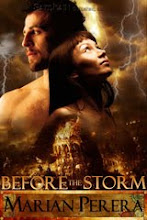
I love symbolism. So in Before the Storm, Alex is called the Black Mare, wears a black dress when she first meets the hero and uses a black ribbon as a bookmark. That’s not a warm or happy color. It implies danger, both of the sinister sorcerous variety (think Snape or Raistlin) and the seductive kind. Bad girls wear black.

Watch for nuances, though. Violet doesn’t carry the same connotations as purple, so it may sound more normal for a king to wear royal purple than to wear royal violet. And the names of colors should take geography and history into account. The color ultramarine didn’t come into use until the year 1598, and a world without a certain painter is also unlikely to call a woman’s hair Titian.

What color is your main character?

Image from : http://www.jupiterimages.com/Image/royaltyFree/95588442


Wednesday, December 22, 2010

Strong heroines


Most of the readers who reviewed Before the Storm said they liked the strong female characters. I'm happy about that, and it made me think about how strength is expressed in fictional female characters.

I’ve always liked books with tough heroines, even when they're in the middle of an all-male cast – Hyzenthlay in Watership Down and Petra Arkanian in Ender's Game. A female character doesn’t have to be the star of the show to be strong, and she can make mistakes, as Petra does after Ender depends too heavily on her at the end of the book.

In fact, it’s much better if she makes mistakes and gets hurt for it. Invulnerability means the readers are never going to care about her as much as if she really gets hurt. While I enjoyed Jacqueline Carey’s Kushiel's Dart otherwise, I soon realized that the heroine, Phedre, could get raped, beaten and burned with a hot poker without this detracting in any way from her beauty or having a psychological effect on her.

Strong also doesn’t mean unfeminine. There are novels where the heroine is so focused on being intelligent or being in charge that she ends up frumpish and unattractive. It’s one thing for a woman not to be interested in fashion, or to not have the time and money to take care of her appearance if she’s got other priorities. But that’s not the same as the stereotype that a woman can be clever or pretty, but not both.

And I prefer heroines who are strong rather than feisty. Feisty always makes me think of someone who stamps her foot while claiming she can take care of herself. The really brave characters, like Melanie in Gone with the Wind, don’t need to tell anyone that they’re strong. They just do what it takes, whether that’s giving their wedding rings to a cause or struggling up after childbirth to defend their loved ones.

And what made Melanie so three-dimensional and realistic was that she followed her society’s norms otherwise – she was modest and shy, deferred to her husband and loved being a mother.

Especially in fantasies set in medieval lands, overly feminist women will stand out. It’s more believable to have them challenge one norm than several. If a woman supports her family, is the head of a business, is single but has several lovers, and beats up an assassin, it’s going to be very unrealistic.

What are the ways in which your heroines are strong?


Saturday, November 6, 2010

Writers as protagonists


How do you feel about books where the main character is a writer?

I tend to avoid these, unless they’re by Stephen King. Maybe King is different because he doesn’t hesitate to put his protagonists through as much misery (pun intended) as possible. But in other novels I’ve looked at, the protagonist has fame and fortune for their writing – for instance, Danielle Steel’s Once in a Lifetime.

One reason I don’t find this much fun to read about is because it’s the hundred-and-eighty-degree opposite of the reality of writing. It’s difficult for me as a writer to sympathize with someone who doesn’t get rejection letters, who doesn’t worry about sales and who never has critical reviews. And usually success comes because the protagonist hit it big in commercial publishing and got a large advance, rather than because she has several books on the mid-list.

Or if the writer is toiling in obscurity, that’s because the Establishment hasn’t yet recognized his talent, rather than because he has none.

But another problem with the protagonist being a good writer is that this skill may need to be demonstrated (otherwise it’s difficult to suspend disbelief). So that means including excerpts of what they write – and this needs to be different from the actual writer’s style. King does a great job of this – the short Alexis Machine snippets in The Dark Half were perfect illustrations of George Stark’s style – but I’ve also seen such quotes look painfully self-conscious and constructed, rather than natural.

The more things a character and a writer have in common, the more danger there is of the character becoming an authorial stand-in – or a wish-fulfilment fantasy at worst. And for many readers, the protagonist-as-writer can be too meta, too much of a self-reference.

What are your thoughts on this?


Tuesday, September 21, 2010

Free will in fiction


Free will is an important concept in theology, but I recently read a story that made me realize how necessary it is in fiction as well.

In the story, one particular species was created to be evil. The narrative made that explicit. And right away I knew that unless the writer was going to twist the concept, to make it unusual and surprising, the story was doomed.

1. Moral judgment

Say that a species was developed to be violent and I’ll buy it. Dogs, after all, were bred to serve different purposes, and some breeds can be more aggressive than others. But when we get into good/evil, that’s a moral judgment and it’s much easier to spot the hand of the writer pulling the strings. Even if this is inspirational speculative fiction, it’ll be difficult to pull off.

2. Definition of evil

What exactly is evil? Aggression or venality or any other of the seven deadly sins are clear in comparison, but evil is a broad blanket term. Does it mean crimes against other people, against animals, against the environment? Or does it extend to personal decisions and choices which may not be approved of? And who does the approving?

Unless a novel operates within the preestablished framework of a religion, such as Frank Peretti’s This Present Darkness, telling me that a person or species is evil tells me… well, nothing.

3. No option but evil

Would you expect a dog to fly?

If you wouldn’t, if dogs as we know them can’t be expected to fly, then a Created Evil species or character cannot be expected to do good. So it/they can’t be held morally responsible for any wrong actions either, because it/they had no other choice. That would be like getting mad at your oven for not keeping your ice cream frozen.

4. Unrealistic premise

How does a species that’s completely evil manage to function at all? Raising children, for instance – how is this done if individuals are incapable of attachment to their children? How are such children even conceived? Is there such a thing as consensual sex in their society?

5. Readers’ emotional responses

When I realized that the evil characters had no choice but to be evil, I immediately felt sorry for them.

Yes, even when they were killing people. What choice did they have? Authorial bias was so much in evidence – with the narrative stressing that they were supposed to be that way – that I could only sympathize with them for their lack of free will. They weren’t being cruel because of their own ambition or their own greed; they were being cruel because the writer was pulling their strings.

And I knew that sooner or later the writer would punish them for doing exactly what the writer had made them do, so I felt sorry for them.

6. Lack of surprise

If a species or a character is completely evil and created to be evil, readers are unlikely to feel surprise (or shock, which is even better) by what this race or character does, especially if the narrative spells out in advance what to expect.

There’s no choice, and when there’s no choice there’s no tension.

7. Where there’s a drow, there’s a Drizzt

Having one member of the race of puppets turn out to be good isn’t too startling a development. Such a character often has a ready-made moral compass installed in him courtesy of the writer, rather than struggling with the ethical dilemnas that he should face in such a society.

Worse, he doesn’t make really serious mistakes, nor is his future in much doubt. If the Drizzt is the protagonist, he ends up with the good guys; if he isn’t, he dies a martyr’s death, usually helping the good guys. He has little loyalty to his own race, nor any guilt about what happens to them. Nor are there any aspects of his former life that he misses.

Tolkien’s world accomodated completely-evil races such as the orcs and goblins because he wrote high fantasy in the 1940s. Since then, not only is this concept rarely used but there have been fantasy novels from the perspectives of said evil races – for instance, Mary Gentle’s Grunts. Anti-heroes, flawed protagonists and nuanced villains tend to be more realistic and entertaining than a black-and-white worldview where some characters or races are intrinsically evil and some are intrinsically good.


Thursday, June 17, 2010

Abuse in fiction


Abuse is tricky to handle. A query I read recently brought that home with a vengeance. Some stories treat characters with a cruelty that shocks and grips and grieves the reader, and some brutalize the characters until the reader mentally and emotionally detaches. In fiction, as in life, there’s only so much pain that we can take.

When pain or grief become unbearable in real life, human beings often develop fictions to cope with it – we call it insanity. When pain or grief become unbearable in fiction, readers simply disengage from the story, and either abandon the tale or laugh at it.
Orson Scott Card, Characters & Viewpoint


The problem is determining where the line in the sand is drawn and how to extend it, but here are a few guidelines I’d use.

1. Don’t let it come off as autobiographical.

No one wants to read self-therapy, especially when it’s poorly disguised as fiction.

2. Give it a twist of plot or character.

A good example of this is Misery, my favorite Stephen King novel. The protagonist, a bestselling writer, is physically and mentally abused – by his number one fan, who’s bitterly upset that he killed off her favorite heroine.

Most of us know what it’s like to be shocked and saddened at the death of a beloved character. Annie Wilkes just takes that a few steps further.

Abusive antagonists are often physically violent. What about one who refuses to lay a hand on anyone, but who controls and manipulates and hurts people nevertheless? Or one who, despite being cruel and abusive, is also amusing and talented? Maybe even protective of the protagonist when someone else threatens her.

3. Let the protagonist fight back.

This was a problem with the query I critiqued. The poor protagonist endured one thing after another with no indication that he was actively struggling to overcome these obstacles.

If the protagonist can’t fight back, please consider whether there’s any catharsis for the reader or whether the abuse (and, in the worst case scenario, death) of the protagonist carries any meaning other than “life sucks”.

That was one thing I loved about Misery. Paul Sheldon does more with two broken legs than a lot of characters do with all their bones intact. He never stops fighting against what happens to him, both mentally – writing the novel Misery’s Return – and physically.

4. Don’t take it over the top.

If a character gets it from all sides – if his dog dies and he’s bullied at school and his parents beat him – he’s going to look like someone whom the Fates have predestined for Great Suffering.

If such abuse has happened in his past, it may be more effective to hint at it after establishing other facets of the character. The heroine of Matthew Woodring Stover’s Iron Dawn has been gang-raped, but I never saw her as a victim of abuse because that incident is mentioned two-thirds of the way into the book, with few details given. By then my first impressions of her were more or less cemented.

If any main characters are abused in your work, how do you handle this?