Monday, November 3, 2008

Dramatic irony


The first definition of dramatic irony I learned (sixteen years ago) was the audience or the readers knowing what the characters did not. That’s a simple way to express what can be a very complex and powerful tool in a novelist’s bag of tricks. Dramatic irony can occur in every genre, and it can be used in different ways.

1. An alert to the readers

When the three witches mention Macbeth’s name at the start of the play, that’s something the other characters have no idea about, but the audience does. We know that a dark purpose is in motion, that something ominous is going to befall Macbeth, and soon enough it does.

Dramatic irony walks a line here. If not for the single mention of Macbeth’s name, the witches would have seemed to come out of nowhere when they confronted Macbeth, and yet they don’t need to make their intentions explicit. Dramatic irony does best when it’s not heavy-handed, when it doesn’t spell out too much of what’s to come or belabor the point. The characters should never be aware that what they’re saying is portentous.

2. Raising tension for the readers

At its best, dramatic irony should make readers want to shout or plead with the characters to listen, to wait, to run, to draw back. A long time ago, I wrote a story which I think of as a Cautionary Tale because I made so many amateur mistakes in it, but there was one moment I still like. An assassin set out to kill the protagonist, and took passage with some mummers called Mallekho’s Players. Meanwhile, the protagonist kissed his wife and children goodbye and set out to confront his enemies (who had hired the assassin). As he rode out from the city, he passed a chain of brightly painted wagons with the words “Mallekho’s Players” on the side.

Dramatic irony is similar to foreshadowing this way: it hints that something bad is going to happen. One difference, to me, is that dramatic irony is more specific – and as a result, produces far more tension. I could have had the protagonist riding out under a flock of crows perched on the bare branch of a cypress tree – both symbols of death – but that would have been far too subtle. It wouldn’t have been clear exactly where the danger lay.

Dramatic irony is also different from (and more effective than) the omniscient narrator viewpoint used incorrectly. Dramatic irony always arises from the characters not having all the necessary information, or not putting it together correctly, rather than not being privy to the narrative.

Julia's estranged husband sent her an envelope containing the key to a hotel room. The note inside said that he was sorry about the affair and knew they had a lot to talk about. “Be there at eight tonight,” he wrote. “And don’t tell anyone. It’ll be easier to enjoy each other’s company without your family calling to check on the reconciliation.”

For me, this works a lot better than spelling it out for the readers.

Julia's estranged husband sent her an envelope containing the key to a hotel room. What she didn’t realize at the time was that he had no intention of meeting her, much less reconciling with her.

3. A source of humor

My favorite Shakespearan comedy Twelfth Night, revolves around dramatic irony. Even gritty fantasies like A Song of Ice and Fire occasionally use this device to milk wry humor from situations. When Arya finds Elmar Frey crying over the fact that his betrothal to a princess has fallen through, neither of them realizes that she’s the princess. I thought that was funny. Of course, Martin promptly scared me again by having Arya, angry with Elmar’s selfishness, wish that his princess would die.

Dramatic irony can really manipulate readers' emotions, in other words. And that's a good thing.

Saturday, November 1, 2008

Travel in fantasy


I read an article on travel in fantasies, which made me think. The article covered the usual methods of transportation in a fantasy – animals – and the problems that could and should arise from depending on literal horsepower to reach a destination. But what about alternative methods of travel?

1. Travel through space

I’d like to see a fantasy city which was heavily dependent on canals for transport, like Venice. A map of such a city would be great. George R. R. Martin’s Braavos qualifies, but everything about it seems so exotic that the canals don’t really stand out to me.

Air travel is another option. Hot-air balloons are relatively simple, but aren’t very steerable. Some method of propulsion or navigation that relied on birds or flying mammals/reptiles might be interesting. Then, of course, the story could take a turn into the wholly fantastic and just posit airships or cloudcutters or skyschooners. Over a relatively small area, something like an intangible web across the sky could work as well – it would let in sun and air, but allow people to move rapidly across its strands.

For urban fantasies, I’d love to see more dangerous, edgy methods of transportation, like Blaine the insane monorail train in Stephen King’s Dark Tower series. Or what about a city where the main method of public transportation was a group of intelligent vehicles (or intelligent pterodactyls, for that matter), who worked for or were controlled by a powerful guild? Lots of story potential there.

2. Travel through alternate space

Science fiction has hyperspace, so why shouldn’t fantasy have it too? Whether it’s another dimension that can be reached only through a mirror, an alternate version of our world or a bizarre M. C. Escher-esque place, it could be used as a method of transportation as well – and that would open up a lot of potential plots.

Whoever controlled the alternate space could charge for transport, or could pull strings in the real world through their influence. For that matter, whoever controlled the real-world doorways or portals (or waypoints or phone booths) that led to the other dimension could also wield power – and might not always be in agreement with the first person.

Then there’s the nature of the alternate space itself. Can you simply use this dimension to step from Point A to Point B, or would you find yourself facing four identical doors and have to pick the correct one to make sure you didn’t end up in an active volcano or ancient Rome?

3. Travel through time

I was thinking of my work-in-progress, where one kind of magic involves time manipulation, and I realized that this could be used to allow a person to reach their destination more quickly. For instance, a lake in summer could have time reversed for it by a couple of seasons, meaning it would freeze over and the characters could cross it on foot.

Or what about a mountain pass or city street where time operated differently from the norm, meaning that whatever entered that passage would move three or four times as fast as it usually did? Taken to extremes, you could even have the time dilation effect.

Fantasy writers of the world, imagine! We have nothing to lose except our brains. :)

Thursday, October 30, 2008

The death of the protagonist


There are a lot of things I’ll try in fantasy, but there’s one plot twist which I would hesitate to touch with a ten-foot sword. That’s the protagonist dying.

I’m prepared for this in plays. Some of my favorite Shakespeare plays are the tragedies, where the protagonist’s personality and the Fates themselves conspire to bring about the sad inevitability. It works in literary fiction as well. But in more mainstream novels, or speculative fiction? It’s much more difficult to pull off there.

Part of the problem is that readers invest their time and emotional energy in a person or that person’s struggle, so they hope that person will win and/or be happy in the end. When that person dies or is murdered, it’s sad at best and a shock at worst. There are three books I've read which ended with the killing of the main character and which I don’t ever want to pick up again – Bernard Taylor’s Charmed Life (depressing), Ben Bova’s Mercury (very depressing) and Ayn Rand’s We the Living (so depressing I wanted to toss the book on the floor and jump up and down on it).

So when does this plot twist work?

1. The main character has accomplished his purpose.

This is usually a peaceful, closure-type ending, e.g. Watership Down. If the character hasn’t accomplished what he set out to do, best not to toss him a deathbed consolation prize. If he dreamed of reaching the summit of Mount Everest, and if he’s lying on the South Col in the final stages of hypothermia, having him experience an epiphany that yes, he’s won just by getting that far is probably not going to work.

2. The main character redeems himself by dying.

My favorite example of this is Bridge on the River Kwai. The main character’s death under such circumstances can be very cathartic, especially if there’s no other way for him to defeat the antagonist(s) without sacrificing his life.

3. The story doesn’t end with the main character’s death.

The “It ain’t over till it’s over” ending, superlatively done in A Song of Ice and Fire. Someone else picks up the banner and the story goes on. Probably the only way a fantasy series can continue after the protagonist falls on his sword - or anyone else’s, for that matter.

4. The character’s death doesn’t go dismissed or unnoticed.

One of the reasons Mercury didn’t work for me. The main character, dying of thirst on the titular planet, dictates his last words to the love of his life, who had married another man. She listens to the recording after his body is found, looks at her son (by the other man) and thinks, “Life goes on.” Not much of an epitaph for the protagonist.

The other characters don’t need to spend the rest of their lives in mourning, but if they never even know about the death(s), the story can come off as very bleak and nihilistic, rather than sadly ironic.

If that sounds cynical on my part, it might be--but I get these vibes from what I believe the show portrayed through its scornful treatment of the characters. Why should we care about them if no one--except possibly those destined to die--learns anything?


5. The character isn’t resurrected – or isn’t entirely normal again.

There’s one fantasy series which I stopped reading because a main character who died was brought back and seemed fine except for a nightmare or two. If the author does resurrect the character, it shouldn’t be the equivalent of pressing a reset button and having everything back to normal. Stephen King’s Pet Semetary is a great example of this.

I think that's one reason I play hardcore characters in Diablo II. Once they die, there's no coming back.

Tuesday, October 28, 2008

Fantasy magic systems: what I’d like


1. Less of the good/evil preconceptions.

I’d like to see a Light/Dark magic system where there was no good or evil distinction applied in advance. Maybe the two kinds of magic could complement each other, like the two sides of a coin.

So practitioners of light magic could be strongest at noon, their powers waxing with the amount of natural light. As the sun set, though, users of dark magic would come into their own. As a result, magicians always work in pairs; that way, someone is always there to watch your back when you’re vulnerable.

Stepping away from the good/evil mindset opens the field up and can rejuvenate the cliché.

2. A price to be paid for magic.

In Holly Lisle’s Secret Texts trilogy, the principle was that a magical action had an equal and opposite reaction. So a fierce magical attack produced an equally strong backlash, and some scapegoat on the attackers’ side had to absorb that. In Orson Scott Card’s Hart’s Hope, magic had to be paid for with blood.

This can lead to a lot of interesting setups and scenarios. What other prices would people pay for magic? Their appearances, so that they ended up supremely powerful but also gut-twistingly hideous? The years of their lives – or their children’s lives? What if the price was a renewable resource? The Dark Sun campaign setting in Dungeons and Dragons used a world stripped of most water and metals through the use of magic.

3. Realistic limitations on magic.

In most stories, magic is limited in that only certain people can use it, but I’d like to see better checks and balances on those people as well. Otherwise, there’s nothing to prevent the hero from annihilating the entire enemy army with a barrage of fireballs, or to stop the antagonist from simply reading the minds of everyone she distrusted.

In the first story I wrote, the power of magic decreased with distance, so while a magician could control anything he touched, there wasn’t much he could do to the enemy army ten miles away unless he wanted to get up close and personal with them. I still use that idea, but I also have magic turning on people who overuse it, driving them insane or reshaping their bodies. As a result, they don’t use it constantly, and are always aware of what will happen if they push their power too far.

Magicians who need objects to produce or channel their power could be helpless without those objects – wizards in the Potterverse can’t do much without their wands unless they’re naturally talented, like Animagi.

4. Realistic spells.

Doug Douglason: Yield to me.
Raymond Ractburger: Not while I still draw breath!
Doug: A mere detail that shall be remedied shortly. Magic Missile!
Raymond: Aargh! Berserker Rage!


One reason I like the spells in Lawrence Watt-Evans’s Ethshar novels is because they’re scientific in their names (Ellran’s Immortal Animation, Felshen’s First Hypnotic Spell), requirements and effects. As a result, they’re consistent. A Watt-Evans wizard isn’t going to pull a deus ex machina never-heard-of-before spell out of his, er, hat when in a tight spot. A witch won’t be able to do so at all.

I appreciate being aware beforehand of what magic a person can do, and if they can’t do it, there has to be a good reason why. If a mage previously used a Shield Spell against his enemies, but they corner him anyway through sheer force of numbers, I want a good reason for why he can’t use another Shield Spell and buy himself time to run. The writer wanting him to be a martyr at that point doesn’t count as a good reason.

That was fun to write.

Sunday, October 26, 2008

Fantasy magic systems: what’s been done


1. Dichotomy or trichotomy

Magic is Good/Evil or Light/Dark. Sometimes, there’s a Neutral as well, like the White/Red/Black system of magic in DragonLance.

If the reader can tell in advance that those who use Light magic are good and those who use Dark magic are evil, the story will either need something really good to balance it out – or it’ll have to be written as a deliberate, self-aware take on fantasy tropes, perhaps as a parody. Flipping the system so that the Dark magic is good and the Light is evil has also been done – for instance, in Anne Bishop’s Black Jewels series, the darker jewels are more powerful.

2. Gender-specific

In the Wheel of Time series, female magic-users can channel the One Power safely, but males go insane. In Robert Newcomb’s The Fifth Sorceress, male wizards use the good Vigors while sorceresses practise the evil Vagaries. Both series have been criticized for their take on genders, and I would personally not try this unless I was sure I could handle it very carefully – and that I could bring something new to the table.

3. Elements.

Fire, air, earth and water. This one has been done more times than I can count; the first example that came to mind was David Farland’s Runelords series. One concern I have with this system is that practitioners of the various types of magic are often affected by stereotypes. Fire mages are fiery-tempered, earth mages are stolid, good-hearted people and so on.

It can also be problematic if most or all users of one type of magic are evil, while those who use another type of magic are good. If people don’t choose the kind of magic they have, if they’re born with it, it would be unfair to apply good/evil demarcations to the elements.

One thing I would like to see about this kind of magic is more exploration into how close a mage is to her magic, and how it adversely affects her. For instance, our heroine could be a powerful fire mage – but this means her skin is constantly hot. When she gets angry, it increases in temperature to the point where water boils when it touches her and her clothes burn right off unless they’re made of asbestos.

Some authors go beyond the four-elements cliché by adding a fifth element like Spirit or Heart. This can come off as very Captain Planet if an author isn’t careful.

Next up: what I would like to see more of in fantasy magic systems.

Friday, October 24, 2008

Five misconceptions about vanity presses


1. Misconception: Vanity presses don’t reject anything.

Here's an example of this myth.

"Here is why Tate won't advertise that they are a vanity press. They don’t fit the criteria.

Because they: Don’t accept all manuscripts."


No vanity press accepts everything it’s sent. For one thing, some material may be legally damaging (eg. child pornography). For another thing, there’s no need to.

Let’s say I own a vanity press. I’d like to make $10,000 dollars a month in profits. I can do this by signing up ten authors a month and convincing them to pay me $1,300 each (the extra $300 should cover the costs of printing each book if I cut every corner possible – no editing, stock image cover, no reviews, etc.). After that, I can regretfully reject all the other queries. It’ll convince a lot of people that I’m a selective publisher.

The more money a vanity press makes from each author, the more authors it can afford to reject.

2. Misconception: Vanity presses don’t pay advances.

While vanity presses are supported primarily by the money that writers pay them, the less-than-honest vanities try to pass themselves off as real publishers. One way to do so is to pay advances (or claim to do so).

Now, how to be an advance-paying publisher and still make a profit from writers? Well, the advances could be very low. For instance, $1 per author, non-negotiable. The publisher could also pay – or claim to pay – advances to some authors but not others. Maybe you’ll get it, maybe you won’t. Maybe you will if you're a celebrity.

"For example: Shane Hamman, two time Olympian and currently the strongest man in the world. He rec’d a $20,000 advance."

Although this claim was made about Shane Hamman on September 20, 2006 (where he has supposedly just been paid) and on August 1, 2008 (where he is described as one of the newest authors of Tate Publishing), his book is nowhere to be found on Amazon or on Tate's online store.

To summarize, a non-negotiable single- or double-digit advance is a transparent fig leaf. And if the advance is a maybe/maybe not deal, find out what the criteria are for payment and who has received such an advance – then look for corroborating evidence. For instance, a newspaper article erroneously claimed that a writer was paid “a significant advance” for a book that AuthorHouse printed. Writer Beware discusses that in more detail.

3. Misconception: Vanity presses don’t pay royalties.

Many vanity presses pay royalties. Some, however, pay royalties on the net sales rather than the cover price – meaning that they deduct their costs from the profits before paying the author. PublishAmerica does this, leading to extremely small royalties for the authors. A vanity press which takes in thousands of dollars upfront can also afford to pay smaller amounts back to its authors in the form of royalties and still make a significant profit.

4. Misconception: Vanity presses let authors keep all the rights to their work.

“When you work with a professional POD firm… you retain ALL rights to your work, forever." Link

This claim is made by a number of vanity presses. PublishAmerica also claims in bolded letters that “Movie rights, audio rights, TV rights, merchandising rights, the copyright, they all remain the author's”.

It probably looks very good to writers who aren’t aware that

a. when a book is commercially published, self-published or vanity-printed, the rights of first publication are used up. Once that’s gone, it’s gone for good.

b. commercial publishers also allow writers to retain the copyright, movie rights, etc. Some vanity presses hint or imply that this isn’t the case, to make writers believe that they’re getting a much better deal with a vanity press than they would with a commercial publisher.

5. Misconception: Vanity presses do a wonderful service for “nobody” authors.

"But the quality of writing has nothing to do with how well a book sells, or whether a publisher should publish a book." Link

A writer’s first book – or first few books – are often learning experiences. Even when a manuscript is accepted by an agent, the agent usually requests revisions, and when it goes to an editor, there’s more critical feedback. Writers learn to balance the love of their work with professionalism, and they’re unlikely to believe that everything they write is deserving of publication – only the best.

With vanity publishing, as the quote says, the quality of a book doesn’t matter (though the quality of the checkbook does). Writers aren’t expected to hone their talent, to look at their work realistically or even to edit it. And even if their writing improves to a level where commercial publishing is feasible, how likely is it that writers accustomed to the swift acceptance and constant praise of vanity publishing will be able to outlast rejections?

So they tell themselves that nobodies could not have succeeded in commercial publishing anyway. And they pay up.

Wednesday, October 22, 2008

Underdogs


I watched the first season of Ugly Betty on YouTube this weekend, and it reminded me of one of my favorite movies, Twelve Angry Men. Both the show and the film have main characters who start out with everyone else against them, at the immediate bottom of the totem pole. I felt for them just as quickly, and was hoping for their success.

Underdogs have that kind of appeal. On the other hand, it’s easy for such characters to veer into being doormats or the constant butts of jokes. If the story is intended to be humorous, this is fine. If not – if the character is intended to be sympathetic or strong – there are a few things I’d take into account.

1. The underdog’s personality and appearance.

Whether they’re timid or tough, admirable underdogs all have a few things in common. They keep their dignity and basic decency despite being treated badly; they don’t let their adversaries affect their personal moral code. And they rarely if ever indulge in self-pity.

Underdogs are often less attractive than the rest of the characters, like Tyrion in A Song of Ice and Fire or Mayweed in The Duncton Chronicles. That’s one thing I like about such characters – unlike the stereotypical alpha male or Action Barbie, they can be plain or even ugly. And although they can be charismatic or funny, they are usually disadvantaged in some way and should usually continue to be disadvantaged if the readers are to keep sympathizing with them.

2. The underdog needs to play a role in his being mistreated.

That’s one reason I like The Fountainhead. Howard Roark is treated horribly by a lot of people, but at the same time, he doesn’t go out of his way to be nice to anyone either. He’s obsessive, intractable and indifferent to anyone else’s wishes. He’s not a poor, passive victim – he’s as active as any other character regarding what happens to him. Likewise, in Twelve Angry Men, Juror #8 chooses to vote differently from the rest of the jury, and he sticks to this opinion even though he knows the other jurors resent him for doing so.

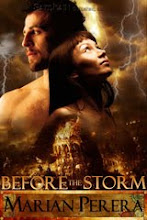
A lot of heroines in romance novels end up in dire straits by accident or through the vile machinations of their enemies, so I decided that Before the Storm would be different. The heroine, Alex, accepts the antagonist’s offer to become his mistress because she thinks that’s better than being a servant. As a result, she bears some of the responsibility for what happens to her, and she never forgets that.

It’s easier to sympathize with someone who makes a mistake (or a certain choice) and pays pays pays for it, rather than with someone who’s a flawless martyr.

3. The underdog cannot be Job.

I once critiqued a synopsis where the main character’s wife died, he was fired, he became an alcoholic and lost custody of his kids. It was one tragedy after another, and I couldn’t hope that the main character would realistically recover.

Underdogs are most appealing when they fight back, even if they go down in defeat (a la Willy Loman). In this synopsis, though, the main character didn’t have a chance to recover from one sucker punch before the next one hit him. Rather than looking like a hero, he looked overwhelmed, like someone whom the Fates had predestined for Great Suffering. Readers love seeing characters struggle against apparently insurmountable odds, but if everything in the universe turns against a character, there won’t be much struggling he can do.

More like feeble wriggling before he’s stepped on, putting both him and the readers out of their misery.

Monday, October 20, 2008

Bathing scenes


I read an excerpt from Kimberly Nee’s novel Eden's Pass which featured the heroine helping the hero with his bath. I enjoyed it, even though I hadn’t read anything else about the story or the characters, and that made me stop to think. In romance novels, the sex scenes can blend together after a while (especially if you’ve read too many of them). Bathing scenes are a good way to vary the pattern, and I like reading them in both romances and fantasy novels (Daughter of the Blood, Kushiel’s Dart).

Sexual tension can run high in bathing scenes if the focus isn’t on the characters having sex. Instead, it could be on one character actually bathing, while someone else watches, reluctantly assists or pretends to help while trying to seduce him or her. A man washing a woman’s hair (as long as she isn’t moaning as though she’s in a shampoo commercial) can be more erotic than the man going straight for the erogenous zones.

The sexual tension is always heightened if the characters are attracted to each other but don’t have sex, and bathing is a great way to skirt the edge of that without falling off. Even the props in such a scene could contribute to this. If the bathee is tensely waiting to feel skin against skin, feeling a pumice stone instead – moving slowly across his or her back – could be very arousing.

A tub or shower is also more conducive to seduction/sex than a lot of other places I’ve seen in romances – such beside a glacier and on horseback. The only bathing scene I’ve read that did not work at all was from an X-Files fanfic where Mulder and Scully decided to take a shower together on their honeymoon. Scully turned out to be obsessed with preserving her virginity and used the shower as a way to satisfy Mulder without having to endure the consummation. It was… strange, to say the least.

Other than that, though, I enjoy these scenes. Bathe on.

Saturday, October 18, 2008

All about blogs


I like blogs. They’re like an online newspaper, except geared to issues that I enjoy, and I enjoy being able to contribute something to my own small corner of the blogosphere.

I thought of having a website, but although a friend was kind enough to set up a site for my secret identity, the only way to transfer information from my hard drive to that site was to do something with “ftp”, and that gave me a headache. I confess: I am a computer illiterate. Blogs seemed as though they might be a little less challenging, and so far, this one has been. Write, post, check the Bare Bones Guide to HTML to figure out how to right-justify something, correct a typo. Even I can handle that.

Then there’s content. I like talking about writing (technically, writing about writing), and doing reviews. There are countless blogs which provide information and advice on different aspects of writing and the industry – insider viewpoints from agents like Miss Snark and Kristin Nelson and from editors and editorial assistants (if you haven’t yet read the story of Moonrat’s lunch with an author, check it out). I’d love to find blogs from other people in the industry, though – cover artists, slush pile readers, copyeditors, publicists. Publishing is fascinating.

Blogs from writers are just as much fun to read. I like tips and advice, but funny family stories are a welcome relaxation and make a personal connection between author and readers.

The only kind of blogs I don’t enjoy are those which are difficult to read (e.g. purple text on a black background) or those which are only or mainly about promotion of the author’s books – descriptions of the books, the latest reviews they got, where they can be bought or even the main characters from the books chatting with each other. Promotion is great, but there needs to be another reason for me to read the blog.

So, for my hundredth blog post, here is a post about blogs.

Now, back to writing.

Thursday, October 16, 2008

Five oddities in sex scenes


This isn’t necessarily a list of things I don’t want to read again, but it’s definitely a list of things that confuse me just a bit.

1. Lack of thought about pregnancy

Probably the best example of this is The Thorn Birds, where Meggie and Father Ralph (a Catholic priest) finally consummate their love and spend some time on a tropical island. That was fine, but Ralph doesn’t ever consider precautions. I suppose that was in line with his religion but if he was going to break a vow of celibacy, he might as well have used some form of protection too.

Needless to say, the inevitable happened. But when he discovered, years later, that Meggie had a child, he never once stopped to do the math. I have no idea why it didn’t occur to him that he could be a Father in more ways than one. He wasn’t that innocent.

2. Religion at the bedroom door

Speaking of religion, I’ve read two romance novels which featured characters who went to church each Sunday… but who had premarital sex anyway. I know some (or many) people reconcile the two, but I would have liked to see the reasoning behind how they did so.

3. Flat male nipples

Or “hard male nubs”. I think this is due to a fear of men’s nipples appearing too feminine if they don’t have the “male” adjective attached like a warning flag.

4. Quick-wick sheets

That’s the only explanation for the lack of any damp patches. This is even more strange if the woman has lost her virginity and then gone blithely to sleep on the same damp, stained bed linens. I think a man who stripped the bed and put clean dry sheets on before bundling me back into it would be a keeper, but maybe that’s just me.

5. Prettification of oral sex

The woman’s genitalia smell or taste like something dainty and aesthetic, like flowers. Unless she’s douched recently, this doesn’t seem likely. I’ve even read about heroines who taste like apples and honey, which make it sound as though they’ve got a picnic basket down there.