Writer Beware is a watchdog group which collects information on the publishing industry and on literary scams. Its founders, Ann C. Crispin and Victoria Strauss, are multi-published authors as well as being honest and helpful to other writers - and I'm speaking from experience there.
So of course the scammers try to discredit what they say. Normally such bad-mouthing is best ignored, but when I read Writer Beware's latest blog post, a follow-up seemed called for.
Because there's a hate group calling itself "The Write Agenda", and it's called for a boycott of books from anyone who criticizes it. Or criticizes scams, in general. Perhaps that's why I'm on the list too. At least I'm in good company.
I'm not sure what this list is supposed to achieve. Maybe if "The Write Agenda" was a huge group of librarians, booksellers, etc. it would have some effect, but right now it's an anonymous person or persons who can't seem to do more than conduct a half-assed smear campaign. Despite its many claims, websites and sockpuppets, "The Write Agenda" doesn't seem to attract much support (its Facebook page, for instance, has 32 likes).
Anyway, if I were that easily intimidated I would never have left the Middle East.
Not that that's all, though. According to another writer, "The Write Agenda" posted one-star reviews of its critics' books on Goodreads, though these have now been removed. And "The Write Agenda" also wants to burn its critics' books, so they're soliciting donations.
Sadly, they don't have a Photoshopped picture of a collection bin with my name on it, but maybe they'll buy a few copies of Before the Storm anyway. If anyone's doing a Fahrenheit 451 on the books of people who tell the truth about scams, I don't want to be left out. And if money's tight, "The Write Agenda" can always get e-copies. Tweet
Friday was my last day in the Histology department at the Hospital for Sick Children.
Now that rotation is over and I miss it a little, even though Histology was my least favorite aspect of medical laboratory technology. I always felt as though I was memorizing facts about it (a lot of facts) without ever really enjoying the material or the lab work the way I enjoy microbiology.
Worse, after each semester I would promptly forget everything I had studied, meaning the entire process had to be repeated for the next set of exams. Which was kind of depressing.
But the rotation helped a lot. Histology still isn't the most fun I've ever had in a laboratory (that would be the time I had to check on a bacterial culture at a quarter to midnight, so the guy I was dating came with me, and to this day I don't remember if the bacteria were all right). But anyway. When you spend all day working in one field, it's much easier to become proficient in it, and the rotation drew everything together so that all the facts I'd memorized made a lot more sense.
And then I got to see an autopsy.
I've read a lot of Patricia Cornwell's novels - Post-Mortem, Body of Evidence, etc - but seeing the autopsy for myself was... different, to say the least. No description can recreate the sharp smell of formalin, the sweat on your forehead, the sound of connective tissue tearing away, the squishy slippery feel of internal organs. I wasn't sure I would bear up beforehand, but it was all right as long as I didn't look at the face, hands or feet.
Staring at the torso made it easier to think of the anatomy diagrams in my textbook instead. I won't ever want to perform autopsies, but this one was an unforgettable experience.
Finally, on Friday I got a new lab coat because the old one was covered with colorful spots and blotches from all the tissue-staining we'd done during the week. And on Monday I start in Hematology.
I read Rumer Godden's Miss Happiness & Miss Flower when I was nine and loved it, but my copy was lost in transit somewhere between Texas and Dubai. So it stayed on my to-buy list for years, until the book finally came back into print and I paid for another copy with Swag Bucks (affiliate link). Free books rock.
Well, free good books.
But I'm going to hold off on buying any more until it's time for Christmas shopping, and start stockpiling Amazon gift cards instead. Swag Bucks is a good way to earn these, and if you sign up now, you can earn an additional 70 SB by entering the code BIGTIMEBUCKS (which along with the signup bonus means you'd start out with 100 SB). The code is active now and is good until 11:59pm PT tomorrow.
There's also going to be a Swag Code Extravaganza tomorrow, though I'll be starting my next rotation - in Hematology - and will miss most of the fun. Basically, there'll be several codes given out by Swag Bucks throughout the day, meaning 60 additional SB. The first one will be on the Swagbucks Twitter feed at 6:00am PT. This is an easy way to get a few additional bucks.
And if you're signing up, please consider using my referral code. :)
Stephen Mansfield’s previous books include The Faith of George W. Bush and The Faith of Barack Obama, but this book is not called The Faith of Oprah Winfrey. Because from his point of view, she’s got the wrong faith.
Therefore it’s called Where Has Oprah Taken Us?: The Religious Influence of the World's Most Famous Woman. Partly an examination of Winfrey’s life from an evangelical Christian perspective, and partly a commentary on the effects of religions in America, it made me curious. I haven’t watched a single episode of The Oprah Winfrey Show, and I didn’t know much about her except that she was in The Color Purple.
One review copy later, courtesy of Thomas Nelson’s Booksneeze Program, and I settled down to find out.
The start of the book is gripping. Winfrey was born in circumstances that were challenging to say the least—her unmarried mother was a maid, and this was rural Mississippi in the 1950s. Her adolescence was marked by a pregnancy at fourteen, the baby dying a month after birth.
Yet she never stopped believing that she had “a higher calling”. And when she was hired by the local CBS affiliate to become the first black female anchor in Nashville history, she capitalized on her talents—intelligence, an ability to connect with people and an innate strength.
During one early assignment, Oprah introduced herself to a shopkeeper and offered her hand. “We don’t shake hands with niggers down here,” the man angrily retorted. “I’ll bet the niggers are glad,” she fired back, unflinching.
In her twenties, though, the religion she’d been taught in the Baptist church she attended no longer satisfied her. Years later, though, as she struggled to reinvent her show, she embraced spirituality and endorsed the careers of many New Age mystics with the Winfrey rubberstamp.
That’s where the book stopped being interesting. After that point it’s no longer a biography, albeit a biased one—instead, it’s an attempt to counter Winfrey’s beliefs with Mansfield’s beliefs. Italics set his more evangelical commentaries apart from the rest of the book, so readers who don’t already agree with this perspective know what they can avoid.
I read them all, though, and found Mansfield’s views as unrealistic as he clearly finds those of Deepak Chopra. In his world, all humans need gods to tell them what to do. Minus the god, he believes we either worship myths or ourselves—or in Winfrey’s case, combine the two by elevating oneself to mythical status.
And while her dreams (especially with regard to the film Beloved) may sometimes cross the line between ambitious and inflated, I’m not sure that Mansfield’s perspective is any better. He describes humans as “servants” and “subjects” who “do not create themselves or their destinies by thoughts or mantras or anything else” (pg 178). If Winfrey had believed that she could not influence her own future with her hard work and talent, where would she be today?
Then again, Mansfield displays a consistent fear of other people’s independence, especially their mental freedom of thought. One of his chief criticisms about Winfrey is that she picks and chooses what is meaningful to her from the beliefs of various religions. Another is that she leads us into temptation—specifically, that she uses her power and influence to foist New Age mysticism on people.
Jesus said something about eyes and planks which may be relevant here.
So where has Oprah taken us? I finished this book unconvinced that she was contributing to the downward spiral of America, mostly because there was no evidence that her religion—whatever it is—was doing anything to people that Mansfield’s hasn’t done as well. Though the book does include fictionalized accounts of how Oprah viewers “Jenny” and “Tina” became dissatisfied with Christianity or with their lives as a result of absorbing Winfrey’s endorsements of New Age gurus. And after reading those stories, I think Mansfield should try writing non-fiction instead.
Monetary systems in fantasy often fall into the gold/silver/copper lines. Partly because this is familiar and partly because it’s easier for readers to remember than, say, platinum/steel/tin.
Usually, the variations come in what the different types of coins are called. In Westeros, the world of George R. R. Martin’s A Song of Ice and Fire, gold coins are dragons and silver coins are stags – an interesting tip of the head to the political system, where the previous (dead) king’s symbol was a dragon, and the current king’s sigil is a stag.
In China Mieville’s world of Bas-Lag, people use shekels as currency, which I liked a lot because it reminded me of the ancient Middle East. Jack Vance’s world of Tschai is even more imaginative, though, since people there use sequins.
Sequins, on Tschai, are small colored gemstone-like objects that grow in nodes that bud unpredictably from the ground. Nodes can produce over a hundred sequins, which all start off clear, but take time to ripen to their final colors of scarlet and purple (passing through white, blue, green, etc. along the way). This sets the system in place – the clears are almost worthless while the purples are the most valuable.
So fortune-hunters on Tschai look for nodes. Needless to say, there’s an area where nodes do grow in some quantity, and it’s a hunting province patrolled by the vicious aliens called the Dirdir.
In our own past, people have used cowrie shells and salt as currency (the word “salary” derives from “salt”). Theoretically, money can be made of anything, as long as people can’t easily reproduce or damage it – coins made of glass would be unfeasible. It should also be in a form that can be readily transported and transferred.
Only in modern times has money been digital, existing as information passed from one computer network to another. I’ve thought and thought, but there seems to be no way to translate this to a fantasy world, without first setting up a banking system and teaching people finance. Until then, characters will just have to carry around their shekels, sequins, stags and so on.
I haven’t read this book yet, but it’s going on the list. Last Suppers: Famous Final Meals from Death Row, by Ty Treadwell and Michelle Vernon, not only describes what condemned prisoners last ate, but includes jailhouse recipes.
That would make for an interesting dinner-table conversation. “This soup is delicious.” “Why, thank you. It’s based on the Alcatraz recipe – with a dash of fish sauce for that Hanoi Hilton flavor!”
But for those of us who aren’t into cooking for large numbers of hungry felons, there’s still a lot to enjoy. James Smith requested a lump of dirt, which he didn’t get. Maybe the prison yard dirt was just too gravelly for him. And Victor Feguer asked for a single olive, unpitted. He probably got that.
David Castillo, though, went to the opposite extreme and ordered “24 tacos, 2 cheeseburgers, 2 whole onions, 5 jalapeno peppers, 6 enchiladas, 6 tostadas, one quart of milk and one chocolate milkshake”. I’m thinking that after such a meal, prison officials might as well have sat back and waited for his cholesterol levels to kill him.
Entertaining though this is, the authors never let you forget that the people in question committed despicable crimes – each section has at least a one-line mention of the condemned prisoner’s murders. I won’t say you need a strong stomach (no pun intended) but it’s not entirely light-hearted either.
Which got me to thinking about my own last meal. No contest, really. I’d want a full Sri Lankan spread – rice, chicken curry, murrunga (drumstick curry), mallung (chopped greens), mango chutney, poppadums and coconut sambol hot enough to cause spontaneous weeping six feet away, washed down with a glass of sweet coconut water. The only thing I’d decline would be a banana leaf platter. I am somewhat Westernized.
PublishAmerica’s royalty checks – or lack thereof – went out at the start of September, and most writers received a reality check as a result. While their shocked and disillusioned reactions are painful even to witness, they’re also predictable. Without exception, PublishAmerica’s books are priced so highly that they’re not likely to sell except to the author's family and friends. Some Kindle ebooks are priced at well over $20 (after the author has paid $49 for the book to be uploaded to the Kindle).
That made me think of book pricing in general, though.
Writers can directly control the prices of their books only when self-publishing, and even then a self-publishing service such as CreateSpace won’t take a loss on a book, so there's a minimum price which needs to be set. There’s more flexibility with ebooks, though. Self-published ebooks tend to be between $0.99 and $2.99 on the Kindle, and some are even offered for free.
There’s some debate about this – does a cost of $0.99 devalue the book and scream “self-published”? A number of readers will still take a chance on any book which costs only a dollar, so would that make up for the readers who’ll automatically avoid it? I’m not sure what to think about this, perhaps because I don’t have an ereader of any kind, and I generally don’t take chances on print books unless they’re free.
Still, if I were selling a self-published ebook I’d probably go for $1.99 no matter how long the book was. That seems like a safe compromise.
In general, readers won’t pay more than $5 for an ebook unless the author is a household name. And even if they do pay $10 or more, which some publishers charge, they won’t enjoy it. Many one-star reviews for highly-priced ebooks on Amazon are complaints about the price rather than about the quality of the book.
That’s self-publishing. What about trade publishing?
The longer the book, the more the publisher needs to charge, and there’s a threshold above which readers won’t go. Usually that’s around $30 for a hardback, $10 for a mass market paperback and so on. Even Susanna Clarke’s debut novel Jonathan Strange & Mr Norrell, an 800-page doorstopper in hardcover, sells for $27.95 – and was backed up by an "imaginative (and aggressive) marketing campaign" from Bloomsbury.
Too high and the reading public simply won't buy. Too low and there won't be much reward for the writer's hard work, unless the sheer number of copies sold makes up for that. It's a balancing act.
Finally, editor Anna Genoese wrote a great article on how publishers determine profit and loss – and how a book can fail to make the former. Check it out. I especially like the article because it blows a hole in the myth that if your book doesn’t earn out, you have to return the advance.
Horses are common in fantasy, and have as much of a mystical appeal as swords. When I was a kid, I loved reading horse books – My Friend Flicka and The Black Stallion. Horses feature prominently in mythology as well – the Horsemen of the Apocalypse are often identified by the colors of their mounts, and Odin was said to ride the eight-legged horse Sleipnir.
The most well-known horse in fantasy may be Shadowfax from The Lord of the Rings, but there are dozens of others, such as the white horses in Mercedes Lackey’s Valdemar books. The horses are telepathic beings called Companions that choose certain humans.
But because horses are so often haloed in this way, I enjoy seeing them hostile and dangerous. The Keplians in Andre Norton’s Witch World are red-eyed beasts that lure humans to their deaths, though even they were civilized in The Key of the Keplian, when a girl saved a Keplian mare and her foal.
I’d love to see ugly horses as well. With horns or tusks, maybe, or natural bridles in the form of tendrils sprouting from their heads. Said tendrils would sink into the flesh of a rider, linking the two creatures via nervous system and meaning that commands could be given mentally and instantaneously.
They could have sharp, slashing blades growing from their bodies – like the Hippae in Sheri S. Tepper’s Grass. When people ride these horses, they’re forced to sit perfectly upright so they don’t get impaled on the spikes jutting from the back of each horse’s neck. As for the Hippae themselves, they’re intelligent and vicious – one review described them as being “velociraptor-like”.
Armored horses are also an option. They might grow flat close-fitting plates of keratin along their backs and sides for protection – though that would also reduce their speed and they might have broader hooves to carry the excess weight. They just wouldn’t have the “champagne-glass ankles” of thoroughbreds.
In the world of Eden, I like to characterize lands by the different types of horses they use. Dagre, in Before the Storm, is the closest to what we’d consider normal, so their horses are ordinary too, but the only breed of horse in Iternum is the palomino.
And Lunacy has intelligent but wild horses, which prey on people. Natives of Lunacy ride anything but horses, because there’s too much of a risk of the wild horses trying to impersonate tame ones, or even breed with them.
In Diana Wynne Jones’s The Tough Guide to Fantasyland, a humorous parody of the cliches of fantasy, she mentions horses being treated as living motorbikes. That’s something a writer needs to take into account if the horses are covering miles and miles of rough terrain without rest or food. And if they’re a different breed of horse which is capable of this – like the sandsteeds in A Feast for Crows – it might be more realistic to give them a weakness too.
A lot of writers have read Pushcart Press’s Rotten Reviews and Rejections… or if they haven’t, they might like to. If literary greats like Emily Dickinson and John le Carre could receive rejection letters, it could take the sting off the polite refusals in a hopeful writer’s inbox.
So I enjoyed reading most of the entries. Pearl S. Buck’s The Good Earth was turned down with the comment,
Regret the American public is not interested in anything on China.
“The what Luck Club?”
Then then there are the rejections that just don’t make sense, such as the one which seems to mistake George Orwell’s Animal Farm for a story about animals. I once did that too, but I was eleven at the time.
On the other hand, some of the rejections are understandable. If a book is 350,000 words long, it’s very unlikely to be published (and if it is, it'll need a marketing push to make up for the higher price). Many of the entries are also rejections or reviews of older books and classics. So this book is still well worth a look, but I wouldn’t take it as evidence that the publishing industry is dying, that editors don’t know a good book when they see one, etc.
From fairytales to epic fantasies, this genre has some of the most mind-stretching concepts when it comes to houses. Children’s stories have the gingerbread house in Hansel and Gretel, which uses an easily adapted concept – use one’s living quarters to attract prey. Then there’s the chicken-footed cottage of Baba Yaga, and it only gets better from here…
1. Living houses
One of my favorite paintings in The Alien Life of Wayne Barlowe depicts a Villar, which looks like a gigantic human hundreds of feet tall… from the waist down. Its torso is a castle, complete with turrets and battlements (it has no head, adding to the alien look), and inside the torso, the Dwellers ride the nomadic Villar.
What I like most about living houses is that they take care of waste management and food supplies. Living in the fruiting body of a giant fungus, for instance, means breaking off a chunk of the wall whenever it’s time to eat.
2. Organic houses
Huge seashells come to mind, especially if they have many coils and turns within. Or what about the exoskeletons of giant insects or the skulls of ancient creatures? One of the most memorable things about China Mieville’s Perdido Street Station is Bonetown, which sprang up around the Ribs that are part of a giant skeleton. If the body of a dragon was preserved, people might only need to hollow out the interior.
3. Moving houses
Going a step beyond houseboats, houses might drift through the sky – either built on something which already floats (such as rocks in the Edge Chronicles) or soaring on their own power. People might never need to descend from a skyhouse if it has some means of catching food, perhaps trapping birds or snaring prey on the ground. And in an arid land, this would be a good way to follow the seasonal rains.
4. Segregated houses
Especially in cultures which practice polygamy, each wife may have her own house which the husband visits – though I wouldn’t mind seeing it done the other way around.
5. Sentient houses
In Ray Bradbury’s “There Shall Come Soft Rains”, a fully automated house goes on cleaning itself, cooking breakfast and running hot bathwater long after its inhabitants have died in a nuclear holocaust. I would love to have an apartment that cleaned itself. And a house which could communicate with me might be very convenient, not to mention excellent for security.
Unless intruders managed to foil its defences somehow, perhaps turning the house against its owners. Then it would not be so good.
And while the Bradbury story is SF, it could be easily adapted to a fantasy or horror setting, as the characters slowly realize their house is sentient or as they and the house work together against a common threat.


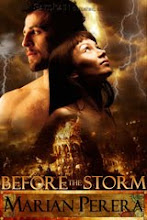
 anyway. If anyone's doing a Fahrenheit 451 on the books of people who tell the truth about scams, I don't want to be left out. And if money's tight, "The Write Agenda" can always get e-copies.


 when I was nine and loved it, but my copy was lost in transit somewhere between Texas and Dubai. So it stayed on my to-buy list for years, until the book finally came back into print and I paid for another copy with
 . Partly an examination of Winfrey’s life from an evangelical Christian perspective, and partly a commentary on the effects of religions in America, it made me curious. I haven’t watched a single episode of The Oprah Winfrey Show, and I didn’t know much about her except that she was in The Color Purple.

 , by Ty Treadwell and Michelle Vernon, not only describes what condemned prisoners last ate, but includes jailhouse recipes.
  , an 800-page doorstopper in hardcover, sells for $27.95 – and was backed up by an "
 and
and  . Horses feature prominently in mythology as well – the Horsemen of the Apocalypse are often identified by the colors of their mounts, and Odin was said to ride the eight-legged horse Sleipnir.
 , but there are dozens of others, such as the white horses in Mercedes Lackey’s Valdemar books. The horses are telepathic beings called Companions that choose certain humans.
 , when a girl saved a Keplian mare and her foal.
 . When people ride these horses, they’re forced to sit perfectly upright so they don’t get impaled on the spikes jutting from the back of each horse’s neck. As for the Hippae themselves, they’re intelligent and vicious – one review described them as being “velociraptor-like”.
 , a humorous parody of the cliches of fantasy, she mentions horses being treated as living motorbikes. That’s something a writer needs to take into account if the horses are covering miles and miles of rough terrain without rest or food. And if they’re a different breed of horse which is capable of this – like the sandsteeds in
  – it might be more realistic to give them a weakness too.
 … or if they haven’t, they might like to. If literary greats like Emily Dickinson and John le Carre could receive rejection letters, it could take the sting off the polite refusals in a hopeful writer’s inbox.
 was turned down with the comment,
 for a story about animals. I once did that too, but I was eleven at the time.
  .
. depicts a Villar, which looks like a gigantic human hundreds of feet tall… from the waist down. Its torso is a castle, complete with turrets and battlements (it has no head, adding to the alien look), and inside the torso, the Dwellers ride the nomadic Villar.
  is Bonetown, which sprang up around the Ribs that are part of a giant skeleton. If the body of a dragon was preserved, people might only need to hollow out the interior.
  ) or soaring on their own power. People might never need to descend from a skyhouse if it has some means of catching food, perhaps trapping birds or snaring prey on the ground. And in an arid land, this would be a good way to follow the seasonal rains.