Showing posts with label promotion. Show all posts
Saturday, September 28, 2013
Five bad kinds of promotion
Going far beyond the usual sockpuppetry or spamming message boards with mentions of one’s book…
1. Anthrax scare
Sending an editor a can labelled with Anthrax and the biohazard symbol. That’s a good way to make sure no one ever opens anything with your name on the return address.
2. Telemarketing
I once saw this posted on an author’s Facebook page :
“this may sound crazy but ... it's also certainly determined! How about opening up a phone book and just start calling people and asking them if they like to read?”
My first reaction: “This may sound crazy?”
3. Fake publicist
I heard a strange idea at a meeting. The marketing guru suggested "creating" a publicist to help you set up your appointments and events. You introduce him or her with their fictitious persona and they sign all the news releases etc., even though it's really you. It gives the idea that you have a publicist.
I suppose that could work until someone wonders why this publicist has no internet footprint, no apparent experience and so on. And even the best publicists can’t do much without a good product and adequate distribution on the publisher’s part. So at best, this isn’t likely to go far.
Worst-case-scenario?
Our concom got a packet from a self-pubbed author's "publicist." It was one of the most GA things I'd ever seen. In addition, the author was asking for things we can barely afford to provide for our top guests.
4. Inappropriate locations for book signings
Even if an author has written the definitive book on abuse, a therapist’s office is not the best place to hold a signing. Of course, that’s trumped by the idea of hawking one’s books in a women’s shelter, though I suppose the shelter residents could be considered a more or less captive audience.
Though not as captive as those who aren’t going to walk away no matter what the circumstances…
Once my novel, [title redacted--Marian], is available, I too will target a market other than bookstores. It has a huge story line of murder, so I plan on doing signings at the local morgue. Funeral homes too!!!
5. Shooting yourself
Alveson said that even as she waited with the wounded Dolin for emergency personnel to arrive, he began talking about his memoir.
Talk about suffering for your art.
Tweet
Wednesday, February 9, 2011
The Pulse of Publishing : guest blog
It's amazing how much publishing has progressed since I first started writing, back in 2001. That made me wonder if writers should be aware of all these changes - and if so, how they could learn what's being talked about, blogged about and Tweeted in this industry.
Changes always seems to be going on in the publishing industry. New publishers appear, editors change jobs, more authors are self-publishing and scams are revealed. How much of this should writers be aware of?
Read the rest on Absolute Write, where I'm guest blogging today! Preferably while drinking hot chocolate before a fireplace... temperatures over here are well below freezing. Brr.
Tuesday, February 8, 2011
Tales from the promotion front
I made up some fliers about my book, with the cover art on the front and an excerpt on the back, and decided to give one to an instructor of mine who likes fantasy. So I taped a chocolate toonie to the front, wrote "Hi Michelle, take a look!" on a Post-It, stuck that on the flier and slipped it into her mailbox.
Today Michelle told me that when she found it, at first she was pleased to get candy. "Then I looked at the flier," she said. "And I thought, oh, that's interesting. Marian found a fantasy author with the same name as her!"
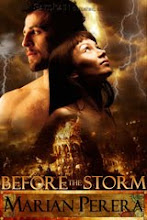
And I have a giveaway on Goodreads for a trade paperback copy of Before the Storm
Saturday, September 25, 2010
Interview at SolelyFictional
I was delighted to be interviewed by N. K. Kingston, and the result is up on her blog SolelyFictional. The interview covers Before the Storm, my views on e-publishing and some of the promotion that Samhain and other Samhain authors have generously helped me with.
It was fun to do. Thanks very much, Natalie!
Saturday, June 12, 2010
Guest blog: Ten Percent of Nothing
Today I'm guest blogging on Writer Beware!
Yes, I'm all happy about it.
Not about the subject, though. Ten Percent of Nothing
Click here to find out what eventually happened to her schemes and to her clients. And beg, borrow or buy the book if you can - it's recommended reading for all writers.
Plus, here's an article describing - in step by painful step - what a Deering victim went through. That article is especially meaningful to me, because when I originally read it in 2006, that was the first time I'd heard of literary scams and I was fascinated by them.
I still am.
Labels:
guest blog,
promotion,
reviews,
vanity presses
Friday, April 23, 2010
Guest post: To blog or not to blog
Today I'm guest blogging on Susan Johnston's very informative The Urban Muse, which has reams of great information on writing, blogging and freelancing. I started reading it one day and realized well over two hours later that I was still reading, which only happened before when I discovered TV Tropes.
My post is about the pros and cons of starting and maintaining a blog. Check it out and leave a comment if you like!
This is the promotion for today. Yesterday I joined a private board where I knew most of the people from another board years ago; just didn't have time to catch up with them while classes were going on. So that's one more community which now knows about the book.
****
Yesterday I was looking at romance novel covers on other bloggers' sites, like this one from Viv Arend.
And that's when I realized that I actually prefer not to see the hero on romance novel covers. There's a preference for what's referred to as "mantitty" - marketing shows this, so of course cover art responds. At least it's better than Fabio, IMO.
But neither of them work for me, oddly enough. Maybe because the visuals of men I find hottest are the ones in my head? A reader's imagination is often more powerful than what even the best cover art can provide.
There are only a handful of heroes whom I did like seeing on covers, and even then one of them was only visible from the neck down. Plus, he was wearing a (buttoned) shirt and slacks.
On the other hand, I do enjoy seeing heroines on covers, so the intense gaze of the woman on the cover caught my attention. I especially love heroines wearing beautiful dresses suited to that time and place.
Well, with one exception.
Count the heroine's hands.
Friday, April 16, 2010
78 reasons why your book may never be published
…and 14 reasons why it just might: a review
Why is it so hard?
Because it is supposed to be. Being a novelist is the best job in the world, so it is – rightfully – the hardest job to get.*
I’d heard about this book before, but the numbers in the title intrigued me, possibly because they don’t give whole numbers when divided by 5.
That, and Pat Walsh, the author, clearly didn’t mind the possibility that some writers might be discouraged by the many reasons why their book wouldn’t be published. On the other hand, Mr Walsh is an editor, so he’s familiar with discouragement on both sides of the desk. 78 Reasons
This book debunks a lot of myths, such as the idea that you need to have connections to be published. Much of the advice is great for writers who are starting out, and the section on finances, which explains managed risks and profit-and-loss statements, would be useful to anyone.
Mr Walsh is also blunt but clear on matters which won’t earn him popularity votes, such as certain topics just not being currently hot in publishing even if they are very important to writers (e.g. cancer). He stresses that all writers are not great at their craft and that no one has the right to be published.
That may reduce the book’s audience a little, but I enjoyed the direct style and especially the anecdotes on life in publishing. For instance, there was the writer who could have had a manuscript endorsed by a Pulitzer prizewinner, but spent so much time first editing and poring over the manuscript that the Pulitzer prizewinner died.
Not to mention the manuscript with many strange references which (the writer explained) were in-jokes about Samuel Johnson, who had nothing to do with the story. No, I couldn’t figure that one out either.
Great writers... know that biting criticism can hurt, but misguided praise can harm.
The advice is divided into sections based on writing skill (e.g. “You Have a Tin Ear for Dialogue”), publishers, agents and just plain bad luck. Finally, though, there are the 14 reasons to keep trying. Not for the overly optimistic or for anyone who prefers the easy validation of vanity publishing, this book is a good addition to a writer’s library.
*Then again, no cool-sounding job ever lives up to expectations. I once met someone who told me she worked for the circus. I asked, wide-eyed and eager, What is that like?
There is a lot of paperwork, she said.
Hey, it’s just like writing!
*****
Update on the giveaway : The winners of the giveaway for Glorious are Ebon Star and BookMarc Blogpants. Thanks to everyone who participated!
Update on promotion: Day 10 (April 15): Submitted an application to the Red Room.
Wednesday, April 7, 2010
Magic and steampunk: guest blog. And promotion!
Today I'm guest blogging at Maria Zannini's. Her blog is multi-faceted - something for everyone, whether you're a writer or pet owner or interested in saving money - but it's always a great read. Maria has answered a lot of questions I've had on the journey to publication, and she generously invited me to talk about steampunk.
I love steampunk fantasy. Not only because it combines my two favorite topics, but because it's so versatile. I think there's even a fanfic where the Transformers reach Earth in the 1700s or so, and therefore they take the form of primitive vehicles - steam locomotives and so on.
So head on over and read my post.
But I also wanted to mention a comment from Maria when she blogged about promotion. She said,
If I knew then what I know now, I would have created a blitz and blogged, interviewed or networked in some way EVERY SINGLE DAY of the debut month.
Would you? I thought after reading that. And then: Could I?
Thirty days of promotion, huh? Let's see how that'll work out. I'll keep a running tally of everything promotional I've done.
Day 1 (April 6)
Posted the news on my blog
Posted on Samhain's weblog
Posted on Samhain's Yahoo group
Posted on the Absolute Write forums
Posted on Facebook
Posted on my LiveJournal account
Day 2 (April 7)
Guest post on Maria Zannini's blog
Another writer on AW posted it on her Facebook
Am I going to run out of places at this rate?
We'll see. Wish me luck, you guys.
Labels:
fantasy writing,
guest blog,
promotion,
thirty days
Friday, March 26, 2010
Five pitfalls in promotion
1. Not testing the market
An author once told me that her vanity-published book, which was about a certain disorder, would sell tens of thousands of copies in its first year because it was the only one of its kind. An Amazon search showed that the disorder was common enough for dozens of other books, including a Dummies guide.
2. Having too many websites
Create multiple blogs, at a minimum twelve or more, each on separate themes.
Derek Armstrong, Kunati Book Publishers (now defunct)
I was surprised to read this – how could any writer keep up with so many blogs, providing unique content for each? I’ve got my hands full enough with one blog. Then again, Kunati is no longer in operation, so…
Two or three websites, maintained and updated regularly, give a better impression than six or more. Quality rather than quantity counts here.
3. Contributing articles to unknown websites
Writer Beware recently had a guest blog about whether or not it’s productive for writers to contribute articles to content mills - a website with a large number of articles from freelancers, who tend to be paid poorly for their efforts.
I’m not sure whether this is a good way for writers to gain recognition for their books (this article suggests it could be) but I am sure that there’s something worse than a content mill. That’s a website which doesn’t pay writers at all and which can’t be easily found on a Google search. Here’s an example.
What does the writer get out of it? If all a writer wants is the satisfaction of seeing his or her work on a website, that’s fine. But there are better options and sites out there.
4. Not having a goal
Don’t do anything without knowing why you’re doing it and whether it's likely to work.
Don’t start a blog because a blog is expected of you. Blogs are time-consuming and if you don’t enjoy writing them, that will show.
Don’t make bookmarks, personalized coffee mugs or anything else just because that’s what other writers do. The profit of any such promotion should cover its expense.
5. Not having distribution
The writer makes people aware of the book, and the publisher sells it. Demand and supply. Yesterday I saw the website of XoXo Publishing, which has e-books that aren’t even on Amazon (but which does have marketing and promotional packages for sale to authors).
If a publisher isn’t selling to readers, then it’s selling to authors. And that will eventually defeat any promotional efforts.
Monday, March 22, 2010
The Newbie's Guide to Publishing
Your website, and everything you do on the net, isn’t about what you have to sell. It’s about what you have to offer.
J. A. Konrath
One thing you become experienced with, when browsing the websites of vanity presses, are the promotional efforts of writers. The writers generally work alone at this, since the press has already made money from them and doesn’t need to do anything further. As a result, many of the writers are both hardworking and creative in their marketing.
What I rarely saw from these sites, though, was an indication of whether or not their efforts worked. I like reading about promotion, but I also like reading about results. That’s often the only way to be sure about whether a particular method will work with your own book.
J. A. Konrath’s A Newbie’s Guide to Publishing, a free ebook, is quite different. While it has numerous ideas on increasing readership and sales, those are backed up with numbers, statistics, facts and figures – and the fact that Konrath has tried nearly everything he suggests. He’s a tireless self-promoter.
Maybe a little too much so. When I picked up a recent book of his from the library, I was surprised at how many pages the acknowledgements list took up, and his method of naming characters after booksellers who helped increase sales just wouldn’t work for me. I’m also not certain whether it's a good idea to have a friend create a Wikipedia page for you, even after you're published.
But on the whole, this ebook is one I’d recommend to any writer. It helps that Konrath’s efforts are backed up by a publisher, of course, but he comes across as consistently on the ball, aware of new developments in the publishing industry, checking and calculating the effects of promotional activities, and aware of what doesn’t work – such as mass mailings. He also offers detailed advice on handselling books (complete with sample conversations for those of us who might be a bit shy at doing so).
Konrath’s style is quick and breezy, with short paragraphs, so it’s an easy read. I learned quite a bit from this book, such as how books are remaindered. I don’t agree with the events on his wish list - such as eliminating offset printing and going with POD only – but I do agree that more people, especially writers wishing to improve sales, should know about the business of selling books.
In short, it’s not just about promotion, it’s about well-thought-out and effective promotion. And as the man himself said, it’s about what you have to offer.
Monday, March 15, 2010
Guest blog : The skinny on fat promo
It's easy for writers to become overwhelmed by the amount of promotional tactics out there. Even if we stay away from the blimps and bribes, there are still so many things we can try. Which of them are efficient and effective... and still give us time to keep writing?
Today I'm hosting a guest post from author Maria Zannini, who suggests several ways to promote books, especially online, and does so from experience. Take it away, Maria.
******
by Maria Zannini
Promo is scary stuff. I know. I used to be in advertising. We've been known to sleep with Marketing a time or two.
We of the advertising persuasion don't like to talk about that much.
It wasn't pretty.
When it comes to books, especially a debut book, you'll find yourself mired with options on how to promote it. There is no one right way. What I'm going to reveal is what worked for me, a writer on a budget and with limited time.
I want you to remember two things.
1. You don't have to do it all.
2. And you can promote your book on very little money.
The key to good promo is consistency and content. The more you can do on your own, the less expensive the experience.
I vote for less poor. And here's how I do it.
1. Start with a marketing plan.
2. Decide how much cash you can invest into marketing.
3. Build a marketing calendar around your venues.
4. Write the next book.
The Marketing Plan
If you check out Killer Campaigns on my blog, you'll see 40 posts on promotional outlets that are either free or nearly free depending on your level of expertise. Pull out ten good ones that you think you can handle on your own.
For example, for my promo I chose a web site, blogging, business cards, reviews, interviews, linking, email signature, guest blogging, podcasts, and volunteering. These are the things I thought I could do well without donating a limb. (Limbs are hard to replace.)
Web site: The very first thing I built was the web site, and I did it myself, teaching myself Dreamweaver and creating something that looks professional and unique. As my husband likes to say, sometimes even a blind pig gets lucky. Sadly, you will have to wait another month to see it due to…ahem…me forgetting to renew my domain name. It'll be back though, bigger and better than before.
Blogging: The blog came second. I am comfortable blogging and I use that as my main platform for communication. Unlike many authors, I chose to immerse myself in only a couple of networking venues. I decided it was better to do a couple of things well than spread myself too thinly. Blogging fits my schedule (and my personality) perfectly.
Business cards: I'm a graphic designer by trade, so I have a leg up on most people. But here's a tip. Don’t get too fancy or include too much information. I used the cover of Touch Of Fire for one business card with nothing more than my web site, blog and email address. I want people to remember me. When they go into a bookstore, I want them to hand the seller my card and say, "I'm looking for this."
Reviews: Choose your review sites carefully. Read their past reviews as a guide to the quality of their reviewers.
Interviews: Same goes for interviews. You want to be known, and you are often judged by the company you keep. Choose sites with a strong following of people who love to read.
Linking: I love linking! Regardless whether you blog, send an email or post on a forum, link well and link often. It will raise your ranking on Google.
Email Sig: Passive advertising at its best. Never send an email without an added line listing your book, blog or web site.
Guest blogging: Every guest post should be unique. Never repeat yourself.
Podcasts: This was amazingly fun and not as painful as I thought it would be. It was also different from the normal online stuff.
Volunteer: Nothing gets you on the inside track faster or deeper than volunteering. Planning on going to a conference? Offer to help out for a few hours. You'll be amazed at how much that builds your network, and for doing nothing more than putting out chairs or manning a booth. Talk to people and exchange information. It's a goldmine.
Budget
Now that you know what you'd like to accomplish in a marketing year, decide how much it's going to cost you. Any of you who follow me know I am the Original Frugalista. I don't buy anything unless it pays me back in dividends.
From the list above, I can tell you I spent less than $75 USD the first year. $60 went toward the web site and $15 for business cards. I even got a bonus on the business cards. Somehow the post office crunched the corner of the box and they sent a note to the manufacturer informing them. The company, in turn sent me a brand new batch of cards plus a discount coupon for next time. To top it off, despite the crunching, the original business cards were perfectly fine. How cool is that?
Marketing Calendar
Here is where you start to put everything together. You know what you want to accomplish and you know how much you're going to spend.
The next question is: When is your book coming out?
You'll get varying advice on when to start your promo, but here is the dirty nickel side. You have approximately ONE month to make the bulk of all the monies you'll earn on your book. E-book sales last a bit longer than print books, but the urgency is the same.
You must do the majority of your promo during the first month of the book's debut. If I knew then what I know now, I would have created a blitz and blogged, interviewed or networked in some way EVERY SINGLE DAY of the debut month.
It seems excessive, and it can be, but I can tell you an easy way to showcase yourself without becoming boring.
The answer is content. The reason some authors come off as dull or annoying is because they are saying the same things everywhere they go. So don't do that. If you blog, come up with thirty different topics to talk about. Even if you don't use them all, have thirty posts ready to go. Guest blog widely. Keep your posts upbeat and entertaining, and finally, make sure it somehow relates to your book—without letting it be solely about the book.
Write The Next Book
This is where I tell you to do what I say, not what I do. LOL! Due to some unexpected eye surgeries, my writing was curtailed not long after Touch Of Fire debuted. Oy! You should have heard me sobbing. But sometimes Fate will do that to you. The trick is to get back in the saddle and ride that pony out.
I've given you all my hard-learned lessons in capsule form to keep this post from getting too long, but I'd be happy to answer any specific questions, so fire away.
What sort of promo interests you?
*******
Bio: Maria Zannini is the author of Touch Of Fire, a post apocalyptic story set 1200 years in the future. Aside from writing paranormal romance, she homesteads on six acres of land in the middle of nowhere.
To the west of her roam lions, to the east, the llamas. Hopefully the lions prefer llama-on-the-hoof to gimpy-legged authors. Hmm…llama.
Visit me on my blog.
Or friend me on Goodreads.
Thursday, March 11, 2010
Self-publishing: The Christmas Box
The Christmas Box
Plus, this is a novel. Self-publishing is rarely if ever recommended for fiction.
But an interview gives an insight into the phenomenon, the work behind it and his realistic take on self-publishing. It’s a must-read for anyone curious about how he made a success of his book.
Evans did it, as most self-publishing successes do, with a combination of money, hard work, a well-thought-out strategy and a book that people wanted to read. I found this detail especially telling.
If your book does not look as good as a book published by Doubleday, which is who you are competing with, don't bother.
The Christmas Box
But Evans succeeded because
1. His book had a professional-looking cover.
He knew the importance of cover design. Sometimes, self- or vanity-published writers say that the publisher doesn’t matter as much as the story does, that readers don’t check who printed a book before they buy it.
But readers aren’t likely to pick up that book in the first place if it doesn’t have an attractive cover. Commercial publishers are more likely to produce distinctive and competitive covers than either vanity presses or inexperienced self-publishers.
2. He had the funds to print and promote his book.
In the beginning, I put $7,000 into the Utah market. I sold my book for $4.95 and put $1 into promotion for each book I sold. Initially, I hired a local publicist at between $1,000 and $1,500/month.
The figures in that quote jumped out at me, of course, but then I noticed that he hired a “local” publicist and cornered a specific market. In other words, he spent money wisely. He didn’t try to get national recognition right away. He knew that if he could show strong sales in one state, that would be better than poor sales spread over a large region.
3. He was savvy and tireless about marketing.
Without a publisher's marketing department on his side, he had to work even harder. Tours, radio shows, book signings, independent stores… Evans did it all. He’s like the J. A. Konrath of self-publishing. And part of his success may be due to his ability to see it from the booksellers’ perspective, to recognize that they were under no obligation to carry his book unless they saw evidence that it could make money for them.
At the same time he took risks, such as his strategy at the Mountain Plains book show, before his book was at all well-known. I wouldn’t particularly want to be in such a situation, but if I were, hopefully I’d have the guts to pull off what he did.
But despite his success, Evans encouraged writers to submit their work to agents.
In studying self-publishing, you will see both history and the law of chance aren't on your side.
In other words, his book is the exception that proved the rule, though his story is an inspiring one for all writers.
Sunday, March 7, 2010
1001 Ways to Market Your Books
The March theme for my blog is promotion, so we’re starting with this book. With a cover blurb from the authors of the Chicken Soup for the Soul series, 1001 Ways to Market Your Books
The edition I have was printed in 1998, but while the industry and communications in general have progressed a lot since then (my edition refers to “the new voice mail technology”), I decided to review this and see how the author, John Kremer, can help writers.
The Good
There is some useful advice here – for instance, Kremer offers tips on cover design and developing a strong backlist, but most of all on promotion, marketing and advertising. There are innumerable suggestions on these. Everything is backed up with anecdotes of the people who used that particular technique to sell books or become better-known, and there are plenty of statistics as well.
As a result, I wouldn’t call this book very user-friendly, even though the information is broken up into lists and categories. Perhaps the latest edition is more readable, though – maybe even entertaining. With this one, I felt as though I was getting a lot of information pushed at me very fast, and not all of it was relevant.
The Bad
Some of the tips are either unworkable or idiosyncratic: door-to-door selling, for instance, probably doesn’t work unless you’re in a Girl Scout uniform. I’m also not sure how effective it is to leave promotional information in laundromats and grocery stores, but I am sure that booksellers dislike reverse shoplifting.
When he travels, Greg Godek, author of 1001 Ways to be Romantic, places copies in hotel gift shops and other retail locations. He sneaks copies on the shelves and leaves them there.
And if they compete with or cover up books that the store has actually ordered… well, too bad for those authors, I suppose.
If the stores sell the one copy, he knows they’ll order more. (pg 150)
No, they won’t. Firstly, they couldn’t sell the one copy if it wasn’t in their database. Secondly, how does he know the staff don’t check the shelves and remove any material that they find is not appropriate or not ordered? He’s hardly the first author to try this trick.
Some of the examples given are also nonstandard for writers. What Epson did with their first dot matrix printer may not work for a romance novelist with her first novel. Other tips, such as giving seminars or being recommended by newspaper columnists, may be more effective for writers of nonfiction.
A few suggestions are so unworkable that it seems as though Kremer only included them to pad out the book – for instance, hiring blimps, renting out your email list or bribing your children until one of them comes up with a way to get you on a TV show. If you have enough money for blimps, bribes and skywriters, you could just hire publicists instead of leafing through the book.
Well, perhaps not sarcastic publicists.
Call 213-385-0209. That’s the advice that publicist Arielle Ford gives to authors who want to be on Oprah! That’s the Science of Mind prayer line. Some authors swear it works.
And some authors are relieved they found this book at Half Price. Other tactics would simply be difficult or inadvisable to replicate – for instance, the author of The Messengers, a story of angels and reincarnation, apparently “got a testimonial from the angels”. There was also some repetition of stories and advice, to the point where I felt I was sifting through a great deal of chaff to find the wheat.
Like it or not, your efforts as an author will largely determine your book’s failure or success.
Finally, I’m leery of this admonition because I’ve seen it used often as a reason why writers don’t succeed with self- or vanity publishing. There, the model itself can seriously limit a writer’s sales even if the writer works as hard as possible.
So in conclusion, there’s some useful advice in this book, but I can’t fully recommend it.
Saturday, September 20, 2008
Self-promotion and distribution
I recently read most of J. A. Konrath’s A Newbie’s Guide to Publishing. I say “most” because it’s long*, but it’s very enthusiastic on the topic of self-promotion. There was also information about Konrath’s novels, characters, book covers and so on, but because the guide was well-written and provided plenty of advice, it never came off as simply an advertisement.
Then a few days ago, I went to the library and decided to check the mystery/thriller section to see if there were any Konrath books. Sure enough, there was a copy of Rusty Nail, so I checked it out.
And that got me to thinking. Konrath’s self-promotion made me interested in checking out his books, but what if I’d gone to the library and the book hadn’t been there? I might have looked in the local Indigo bookstore, but what if it hadn’t been there either? I wouldn’t have plunked down money on Amazon for something I hadn’t read through first, especially if I had to wait for it to be shipped.
If publishers don’t made books available to wholesale buyers and to libraries (e.g. making sure the books are reviewed, have LOC CIP data and so on), the only way I’d have access to those books will be if the authors talk stores into carrying the books, or if authors donate them to the library. Konrath is a tireless self-promoter, but I don’t think flying to Canada to drop off copies in individual stores would be very cost-effective.
In other words, self-promotion doesn’t go far without the muscle of the publisher’s marketing department and distributor backing up the author’s efforts. That’s one reason POD or vanity presses wouldn’t work for me (and why I wouldn’t recommend them to anyone wanting an actual career in writing). Vanity presses derive their profits from the author, and therefore don’t need to put books in stores. POD presses rarely if ever have the funds to support a marketing department and salesforce. So most of their book sales are made to the authors instead.
Authors who have been printed through vanity presses or PODs sometimes defend these business models by claiming that word of mouth is all that’s necessary to make a book a success. But what’s the point in being aware that a book exists, if you can’t obtain it? Or if, to read it, you need to shell out $25 for the paperback (yes, POD books can be this expensive) and then wait for it to ship? Unless the book is something the readers really want, how likely is it that they’ll spend and wait patiently?
An author who wants more than local recognition (i.e. within the family/community/town) is nearly always better off with commercial publishing. All the self-promotion in the world won’t get an author past the stumbling blocks of POD or vanity publishing.
*It has some funny moments, though. I especially like the part where Konrath stayed in a friend’s house, ate all the food and built a fort with the sofa cushions. :)
Subscribe to:
Posts (Atom)