Sunday, August 17, 2008

Finally!


I finally finished my article on PublishAmerica!

It discusses writing, includes pictures, references dozens of websites and contains lots of quotes - basically a very long version of my blog posts. So if you like them, you'll enjoy the article.

My only concern now (well, other than whether I've gotten the math right) is where I'm going to keep that article. Should I quote bits of it here? Put it on a website that I no longer update because I've forgotten how to do "ftp"? Leave it in the Bewares forum? Can't think, too tired from writing. I don't even have any wine, so I'll just make a cup of tea and relax for the moment.

Saturday, August 16, 2008

Pitfalls of prophecy


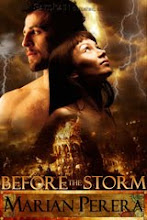
On another blog, I read a post about prophecy in fantasy, which made me stop and think. I didn’t have prophecies in Before the Storm, Dracolytes, Redemption or The Mark of Vurth, and I wasn’t planning on having any in the two novels that are still in the idea stage. There’s magic, there are dragons, there are swords and castles… but no prophecies.

Strange, that.

Well, no, not really. You see, back in my salad days I’d tried prophecies. They can be intriguing if they’re done right, and they give me the same sense of portent and foreshadowing that I get from a Shakespearan tragedy. They can offer hope that the heroes cling to in their darkest hour, or they can be a promise of doom, a prediction of inescapable fate. What’s not to love?

1. They can make things too easy.

Even if the point of the story is for the Chosen One to defeat the Dark Lord, a prophecy which proclaims the protagonist the Chosen One may make things too easy for him. It’s much more interesting if the protagonist isn’t welcomed as the fulfillment of a prophecy and has to work for whatever recognition he gets. I’d be very interested in a book where someone else was crowned the Chosen One, but the protagonist ended up doing all the work instead.

2. They can give away spoilers.

Sometimes this may not matter. In a romance novel, for instance, we know the hero and heroine are going to get together at the end – the fun comes from seeing what route they take to reach their destination. Plus, there’s often a suspension of disbelief here – if there’s enough obstacles and conflict between the main characters, you can forget that there’s an assured Happily Ever After. Likewise, a prophecy that gives away the “what” may still intrigue readers with the “how”.

But it’s also easy to go wrong here. If there are three contenders to the throne, and the prophecy at the start of the book states that the one with the crown-shaped birthmark is the One, that could undercut the tension unless the author subverts the prophecy. IMO, this is one of the best things about A Song of Ice and Fire - while Martin does seem to be slipping prophecies into the plot, there was no pronouncement from on high stating that Stannis or Dany or (Seven forbid) Joffrey was the Rightful Heir.

3. They can be too arbitrary.

Here’s where I fell down with a splat. If the prophecy was made a long time ago and is now available only through a crumbling book, then there’s no reason for the reader to expect more prophecies in the story. But I had a character (a fatesayer, I called him) who actually made such prophecies, because he’d been blessed by the goddess of fate.

Which of course raised the question of why he didn’t keep making prophecies. Each time the hero was in trouble, the fatesayer could simply have tapped into the story’s equivalent of the Psychic Hotline and told the hero what lay ahead of him. Naturally, that would have killed any suspense dead. I did have him only receiving such visions sporadically, and sometimes being reluctant to divulge information because that wouldn’t help the hero earn his victory. But it still felt arbitrary, because he was making prophecies when it suited me and keeping silent when I wanted to build suspense.

One way to get around this would be to have such a character make predictions which were vague or difficult to understand, like the visions of the crone in A Clash of Kings. She foretells Sansa’s role in Joffrey’s wedding, but her vision is so symbolic that no one could have interpreted it beforehand. Or the character could be a Cassandra whose predictions are never believed – but then the characters will need a good reason not to listen to her.

(Digression : I’m annoyed that I didn’t see anything of Cassandra in Troy. Of course, the film was messed up in so many other ways)

4. They can give the story an “epic fantasy” feel.

This isn’t a problem at all if the story actually is an epic fantasy, of course. There, even if the prophecy is vague or unhelpful (in the AsoIaF example, Arya couldn’t have done much about the crone’s vision even if she had known exactly what it meant), the prophecy can bring depth and color to the story. It can give an impression of unseen forces moving behind the scenes.

But this wasn’t the impression that I wanted to give readers with my books. I didn’t want any hint of fate being on the protagonists’ sides, much less being a prime mover in the story. And I wanted the readers to see the unfolding events at “ground level”, rather than with the detachment that can come from knowing a prophecy has dictated how events will unfold. So now that I come to think about it, the lack of prophecies in my books works for me, just as the several prophecies of Orson Scott Card’s Hart’s Hope work very well for that book.

Thanks for the inspiration, GunnerJ; that was fun to write.

Friday, August 15, 2008

Getting away with murder


A writer can do almost anything in fiction, and I do mean almost anything. Want to have a character who’s a rapist or pedophile or murderer and still make me like that character? It’s been done. Want to have characters who are invulnerable or gorgeous or hypertalented and still make me ask to read more? That’s been done too – and I’m a very critical reader.

The writers who get away with this do so by balancing their characters out – either with other traits for these characters or by other features in their writing (such as style, as in Richard Adams’s The Girl in a Swing). There are many ways to make this work for me, but in this post I’ll describe four explanations that don’t work.

1. It’s justified on page 30.

If the character’s unbelievable or repulsive traits are on Page 1, it’s going to be very difficult for me to either suspend disbelief or suppress nausea long enough to get to the part where the author shows why this character is worth reading about.

2. There’s a real-life precedent.

On the whole, I like critiquing. Not only is it flattering to be asked for feedback, it’s a learning experience that goes both ways. I have to think of why something works or doesn’t work, and this helps me with my own writing as well.

The exception to this was when I once mentioned why a character’s behavior didn’t seem plausible to me. Specifically, it was an antagonist who found the heroine attractive and knew she was deeply in love with him, but refused to have sex with her. No reason given – he wasn’t highly principled or gay or living in medieval times or married to a Mafioso’s daughter.

The author replied that she knew someone who had actually behaved like that. Because of that, she took it for granted that the character’s behavior was plausible, and she didn’t see why I had difficulty with it. And since that character came straight from real life, she was very reluctant to change him.

(Digression : With my own writing, I’ve found that characters, events and conversations in real life don’t translate directly into good fiction. I’ve shared jokes in real life that had me cracking up, but when I tried one of those with my characters, it sounded odd – wooden, almost.)

3. Other writers have done it too.

Unless the other writers were writing the same kind of story at the same time, this rarely works as a justification. I like long paragraphs describing the characters’ beauty in sex-and-shopping books, but not in fantasy short stories.

4. The gods created it this way.

When critiquing a story once, I mentioned a concern I had with the characters, and the author explained it away by saying that the gods were responsible for that. This wasn’t too strange an explanation, since the story was a fantasy in which gods featured prominently, and the characters’ unrealistic traits were ones the gods had given them. But that didn’t address the issue. Whoever had created the characters, there was a problem with them.

Besides, the author was writing the story, so “the gods did it” was really “the author did it”. If a critiquer points out a concern in the story, saying, “But I meant to do that” rarely makes them reply, “Oh, well, in that case there’s no problem.”

Thursday, August 14, 2008

There's four things about Marian


Now that I've finished the revisions for Before the Storm, I feel light-hearted and not yet ready to settle down to serious writing. So here's a post that's all about me instead, inspired by a "meme of four" that I originally read about on the Writer Beware blog.

Four movies you could watch over and over

1. Twelve Angry Men : I first watched this as an exercise for a social psychology class. No need for elaborate sets, musical score or special effects when there’s characterization and conflict as good as this.

2. Tootsie : It always makes me laugh. I'd prefer it if there were assertive women in the film besides the one who's actually a man, but it's still fun to watch.

3. Jesus Christ Superstar : Love the music, love the dancing, love the premise (hippies re-enacting Jesus’s last days).

4. The Lord of the Rings : OK, this is actually three films, so I cheated.

Four places you’ve lived

1. Colombo, Sri Lanka.

2. Dubai, United Arab Emirates

3. Austin, Texas

4. Toronto, Canada

Four TV shows you love to watch

I don’t have a TV, so I’ll change this to Four plays you enjoyed.

1. An Inspector Calls, by J. B. Priestley : A wealthy upper-class family is enjoying an evening at home when a police inspector calls on them. He has a photograph of a girl who committed suicide, and over the course of that evening, he forces the members of the family to admit their culpability in the girl’s death. There’s a great twist at the end, too.

2. Macbeth, by William Shakespeare : I studied this in high school, but I’d probably have read it anyway. The fatally flawed, originally heroic main character, the grim atmosphere, the irony and foreshadowing… it's my favorite Shakespearan tragedy.

3. A Doll’s House, by Henrik Ibsen : I can identify with a woman who leaves an oppressive state of control and strikes out into an unknown future.

4. Rosencrantz and Guildenstern are Dead, by Tom Stoppard : The question game is hilarious, and even more so in the film, where the main characters are on either side of a tennis net when they play it.

Four places you’ve been on vacation:

1. London, England.

2. San Salvador, El Salvador

3. New York City, New York

4. Bangkok, Thailand

Four of your favorite foods

1. Chicken parmigiana

2. Sambol (a Sri Lankan dish made with grated coconut and chili powder)

3. Pizza Hut’s chicken fajita pan pizza

4. Chocolate mousse (or chocolate ice cream, or anything chocolate, really)

Good thing most of the people in my family are genetically predisposed to be thin.

Tuesday, August 12, 2008

Perseverance vs. insanity


The definition of insanity is doing the same thing over and over again and expecting different results.
Albert Einstein


On the one hand, you read about all the writers who counted dozens of rejections, hundreds of rejections, before their work was accepted and applauded. On the other hand, you’re told, “If you can’t get the book sold, put it aside and write another, better book.” So what should you do if you’ve received fifty rejections – forget about the book or keep querying? Which one is right?

I think both. Firstly, if a query letter has received fifty rejections, the problem may lie in the query rather than the book. My original query letter for Before the Storm received nearly thirty rejections. After that, I looked at the letter critically and realized that I hadn’t clarified either the romantic aspect of it or the most original part of the story, which was a battle fought with steam engines and cannons in a medieval world. I sent out twenty copies of my reworked query letter and got four requests for partials.

So it wasn’t the story that was the problem, it was the query letter. I believe the same thing applies for Dracolytes - nothing wrong with the novel per se, but I’d originally written a huge flashback into the first page (what was I thinking?). Similarly, a little rewriting may be all that’s necessary to raise both a writer’s spirits and a manuscript’s request rate.

Secondly, why not do both at once? Write another book while querying the first one, since you’ll have to write another one anyway. As Rachel Vater put it,

”I'm MUCH happier if the author has other material so I know they aren't just pinning all their hopes and dreams of huge success to that one novel/memoir/whatever. Because a writer's career is usually not comprised of just one book.”

That way, even if you have to reluctantly give up on or temporarily set aside an unaccepted manuscript, it’s not devastating. It’s also better to give such a manuscript a break than to pin so many hopes on it that rejection becomes unbearable.

Finally, with the new book, consider trying something different. I thought about the famous definition of insanity when I read a new short story that a writer had posted for critiques. It had the same problem as the stories she had written two years ago – an invulnerable character who was a huge stumbling block to plausibility – but the writer was so fond of this character that she wrote him into everything. Critiquers originally pointed out why they couldn’t get past this character to enjoy the rest of the story, but finally they just stopped reading.

That was quite a learning experience for me. I decided that once I finished Empire of Glass, that would be the last of my “scientist in a medieval fantasy” stories for a while, and the next one would be a quasi-urban fantasy. Doing something different doesn’t mean switching genres, but it does mean not telling the same story over and over again in the hopes that maybe this time it will work. Besides, part of the fun of writing, for me, is trying something new with the next book.

There’s intelligent persistence, where you do everything possible to maximize the chances of success. Then there’s blind repetition. And when writers get too caught up in their dreams, the line between the two isn’t all that difficult to cross.

Monday, August 11, 2008

Reverse shoplifting : an investigation


I first came across this practice on the Publish America Message Board. Since PA does not provide its authors with anything in the way of distribution or marketing, they are left trying to find ways to get their books into stores. Bookstores are not likely to order the books, which are highly priced and non-returnable (unless the author petitions PA to change this, and then the store is charged a restocking fee).

Some authors talk managers into placing the books on consignment, but when this doesn't work, they have one last option. It's called reverse shoplifting, and here's an example of it.

"I have started placing copies of my books in book stores; sometimes without their knowing it!"

Not the first time a PA author has tried this, either. Here's a whole thread devoted to getting past those little hurdles called "policies".

"I dropped one off at Martin's ( a local market ) and the manager gave it back to me and said to contact the district manager. Hell, I'd already signed it for the local one. I waited til he left and I put it on the front row of the best selling books. At least someone will look at it."

I wanted to investigate this practice further and see if it was at all likely to be successful, so today I went to the Indigo bookstore at the Eaton Centre and to the World's Biggest Bookstore, which is just five minutes' walk away. I spoke to three employees and a supervisor, asking them what they would do if they found a book that a hopeful author had left on a shelf without the manager's knowledge or permission.

At Indigo, I was told that any such books that the clerks found would be removed from the shelves and the store would then have to figure out how to return them to either the author or the publisher. At the World's Biggest Bookstore, the employees had never come across such books and so they directed me to a supervisor who gave me a lot of helpful information.

"Would you say that reverse shoplifting is not a good idea for authors, even if they're looking for any way to get more exposure for their books?" I said.

"No, not a good idea," she said. "If a customer tries to buy the book, that holds the line up while we try to find out why the book isn't in the inventory. Then we have to explain to the customer why we can't sell it. It's a waste of time."

"So you'd remember the book and the author, but not in a good way?" I said, and she agreed. On the PAMB, authors sometimes console themselves that "any publicity is good publicity", but I personally wouldn't spend money (purchasing a book from my publisher) if the end result was that people remembered me as the author who wasted their time.

"It's best if authors go through the regular distribution channels," the supervisor said, so I asked about books being left on consignment. She said that while the store will do this for local authors, it's rarely profitable because such books slip through the cracks. Books which the store doesn't order are not in the computer inventory (which comes from the head office, so the employees can't add books to it). This means that if customers or employees do a computerized search, they won't find the book that's on consignment. It'll only sell if the customers find it by themselves or the employees remember it and recommend it. She said this could be a problem for authors who went with vanity presses or other methods of printing which didn't give them adequate distribution.

"They should try to see it from the bookstore worker's point of view," she said, referring to the people who tried or advocated reverse shoplifting. I'm glad I had the chance to find out. On the Absolute Write thread where this practice was discussed, a co-manager of a Kroger store said that their policy would be to dispose of any books sneaked on to the shelves in this way, but I wanted to question people for myself.

Digression : I'm very shy in real life, so it was also good social practice for me to go up to strangers and ask them for a moment of their time. I'm fine once I get started and forget about being nervous and self-conscious.

Saturday, August 9, 2008

In search of the perfect title


I’ve never found it easy to come up with good titles for my work. The only one I love is Dracolytes, which is short, sharp and says very clearly that the story is a fantasy. Before the Storm, although it references the weather motif in the manuscript, sounds more like a romance. So it was with some apprehension that I sat down yesterday to find a title for the next book.

I didn’t need to, of course. It could have been the Untitled Opus until it was done, but I like giving my stories names at the start; it’s easier for me to think of them or mention them to my critiquer that way. So I tried to come up with a name for this one. It’s a fantasy, and I wanted the title to reflect a glass/crystal motif in the story.

What about just Glass? No, that could be anything, even a nonfiction book about the history of glass. It also reminded me too much of the title of Sheri S. Tepper’s Grass, but I like that title because the novel's planet is covered with grass. My world wasn’t like that.

I wrote down Children of the Crystal next. Alliteration… good. Similarity to Stephen King’s “Children of the Corn”… not so good. It also mentioned the Crystal, meaning the reader would be aware of that before the characters would. Finally, the group of people whom I had in mind with that title weren’t children at all, nor were they the children of anything. Pawns, maybe, but not children. OK, forget about that, get back to the glass.

I tried Glass Houses, but that didn’t sound like a fantasy. All right, Glass Castles. I could have the heroine say that glass castles break too; you just need very large stones (no pun intended). But if the title mentioned a glass castle, might the readers expect one in the story? Even if they didn’t, I wasn’t sure I wanted a castle in the story, whatever it was made of. I had castles in two other manuscripts; I wanted something different for this one.

I liked the contrast between “castle” and glass”, though, the balance between strength and fragility. I tried Castle of Glass, then crossed it out. Then I wrote Empire of Glass.

Now that one was do-able. It suggested vastness and power, but tempered with a weakness, an Achilles heel. Readers just might imagine an actual glass castle, but I don’t think anyone will think of a glass empire – the title doesn’t conjure up as concrete an image. At the same time, I like the alien-ness potential in an empire of glass, the questions it raises. Maybe I’m putting too much thought into this, especially considering that editors often change the titles of books to make them more marketable. Maybe the title won’t work for anyone else.

But it wasn’t all that painful to come up with one this time.

Wednesday, August 6, 2008

Rewrites


Whether these are requested by an agent, suggested by an editor or undertaken on my own, rewrites are the most un-fun part of writing for me. I’ll do them, and I’ll do my best, but I always approach them with a feeling of mingled dread and inertia. And no surprise, considering that with Redemption I had to scrap everything after the first part and start again (that wasn’t so much a rewrite as a re-imagination of what the book was supposed to be). Before the Storm fared better, but even then, the latest rewrite I did was about thirty thousand words long.

My guidelines for rewrites, what I sometimes remind myself of to stop the procrastination and start the work, are simple.

1. Get into the right frame of mind.

Revision can feel like a tiresome task, one more hurdle to crawl over even after all the writing, editing, submission, etc, but I owe it to myself to make sure that I'm writing the best possible story. In the end, my work will be able to compete with the rest of the submissions in the pile (and hopefully win).

2. Don’t be afraid to delete.

I have separate documents for sections of text that I’ve cut out of the story, and there’s the Track Changes function. It’s often easier to write a different sentence or paragraph if the original text is removed.

3. Have a plan before beginning.

As well as planning what has to be done – major overhaul or just correcting one problem – I try to decide what I absolutely must have in the story. I may need a character who backstabs the hero, but I may not need Judas McTraitor, the villain with no redeeming qualities who was in the first draft. I realized with Redemption that there were really only four characters whom I needed as they were; everyone else could be improved or replaced. Having a clear plan of action at the start helps to overcome the inertia.

4. Be open to what the story needs.

As opposed to what would be easiest for myself. I kept trying to revise Redemption and I kept coming up against a mental brick wall until I realized what I was doing wrong. My original draft had had four parts – let’s call them A, B, C and D. In the revision, I kept A and D, and was trying to rewrite B and C so that they would be better. But if I did so, they wouldn’t lead to D. They would take the story in a different direction (and would incidentally mean I’d have to scrap the sequel as well).

I wasn’t happy about this, but when I read B and C again, I saw that I could mine them for bits of descriptions, dialogue and so on while still allowing the story to develop more realistically. I’m not sure whether I’ll write B and C or B and C, but I know the story is going to be better at the end.

At least until the next rewrite, that is.

Monday, August 4, 2008

Five things I don’t want to see in sex scenes


1. The word “treacherous”.

I’m fine with what are called “forced seductions”, but I don’t want to read something like, Her treacherous body responded to him. That word always makes me think of beheadings in the Tower of London.

2. The giant member.

This feature took pride of place in two novels I’ve read so far, and in both cases it achieved the same effect – the hero was reduced to a walking oversized body part. I don’t think it’s possible to give the hero such an attribute without amusing the readers or having him defined by it in some way, especially if the story goes into detail about how his previous girlfriends weren’t able to accommodate him.

3. The orgasm smile.

Does anyone smile during an orgasm? After it, I can buy, but I’ve read more than one book where the characters smile at the climax, perhaps because it’s not pretty to have them making contorted grimaces instead. There’s even one where the heroine’s face becomes like an angel’s at the crucial moment. Maybe she looked like an angel having an orgasm.

4. The unexpected virgin.

This is where the hero discovers, much to his surprise and delight, that the tamper-proof packaging on his little aspirin bottle is intact.

5. The heroine’s skull.

The tension built up to the charged, emotional first kiss. The hero and the heroine held each other and the kiss grew passionate. Then the hero slid his hand into her hair, “on her skull”.

Suddenly the kiss was over for me, and the hero was doing the “Alas, poor Yorick” scene from Hamlet instead.

Sunday, August 3, 2008

Room 102


On the post I’d written about torture, luc2 asked about torture inflicted by the protagonists, rather than on the protagonists. I hadn’t considered that aspect of the topic.

I tried to think of any books I had read where the protagonists tortured someone. Only three came to mind, and in two of them, the torture scenes didn’t work for me. They did help me come up with a few ideas for these kinds of scenes, though…

1. The protagonists need a very good reason to torture someone.

I’ll define torture as the deliberate infliction of pain (either physical punishment or deprivation such as starvation). Revenge stories where the protagonists trick, depose, shame, frighten or humiliate their enemies are common and popular. But I haven't come across many revenge stories where the protagonists physically hurt their enemies, perhaps because it’s difficult for normal people to coldly and deliberately inflict pain on someone (especially when it’s not in self-defence and the victim is begging them to stop). I haven't got too many qualms with the protagonists killing or executing someone who deserves it, but torture is different.

The only novel I can recall where the protagonist tortured someone and still remained sympathetic was Frederick Forsyth’s The Odessa File, where the victim was a former Nazi who was instrumental in helping other ex-Nazis flee to South America. The protagonist, who was hunting down one of them, broke the ex-Nazi's fingers to obtain information on their whereabouts (in other words, he had a good reason to inflict pain on the man). It also helped that the ex-Nazi was the kind of person who wouldn’t have hesitated to return the favor or kill the protagonist if their positions had been reversed.

The only other situation where I can see torture being justified would be if the torture was evidently justice – for instance, the victim once scarred the protagonist's child for life, so the protagonist immobilizes him and does the same thing. But this has to be handled with care. If the protagonist plans to execute the victim afterwards, making them endure pain beforehand just comes off as sadism for the sake of sadism, rather than to right any kind of injustice. An anti-hero may get away with this; a hero can’t.

2. The protagonists cannot be unchanged by the experience.

"When you look long into an abyss, the abyss also looks into you.”

Moral compasses vary, but a protagonist must have at least a moral needle on a thread. I recently read a novel where a group of vigilantes kidnapped a man who had killed someone in a hit-and-run. They would taunt him with starvation, leaving food just beyond his reach, then go off and eat pancakes together. The contrast was jarring, especially since the protagonists weren’t affected by the torture to any significant degree. Apparently the dehumanization went both ways.

If a protagonist is to remain sympathetic, I want to see them affected by the experience. They don’t need to show it openly – they don’t need to run away, weep or throw up – but they can’t shrug it off or be indifferent to what they have done. They’ve walked a thin line that separates them from the people they hate or oppose – how do they feel about that? Did they enjoy it? Would they do it again? They have looked into the abyss; what do they plan to do when the abyss looks into them?

3. Let the reader justify what’s been done.

If the protagonist justifies it (or her friends do, reassuring her and us that what she has done has been justice rather than torture) I’m gone. If I can’t justify it myself, all the protestations in the world won’t make a difference. Either the author’s shown that the torture was necessary (not just something the protagonist did to make herself feel better, but required), or the author hasn’t done so.

4. Show that the victim deserved it.

Another reason the book I read recently didn’t work for me was because the victim had killed someone in a hit-and-run. That’s manslaughter. The legal system doesn’t execute people for manslaughter, let alone torture them for it, so it was cruel and unusual punishment for the protagonists to do so.

Even if the villain richly deserves to suffer, it’s often a good idea to have the punishment delivered by someone other than a protagonist who's supposed to be sympathetic. I think a few authors believe that heroines in particular can mete out stone-cold sadistic treatment while still remaining likable, and sometimes I imagine the hero of a novel doing to the villain whatever the heroine does. If the scene then comes off as grotesque or unbelievably cruel, why should the heroine get away with it?

Flawed characters are great and anti-heroes can work superbly. But torture needs to be handled carefully, no matter who's inflicting it.