A few days ago, I received a message that I thought came from my bank’s security department. The email asked me to verify my account information so that my service would not be interrupted. It provided a link which I could click to enter a few details.
The return email address seemed like my bank’s. I looked closely at the logo in the email, and it was identical to my bank’s.
I didn't think the varied countries in which I spent my life had much of an impact on my writing.
Partly because I didn't think of those countries... much. I spent years trying to get out of the Middle East, and am now spending years more trying to earn Canadian citizenship. When it came to where I lived, I looked to the future rather than the past, and only just realized how much influence the one had on the other.
That occurred when I read a post on Jess Dee's blog. That's called Dee-liciously Sexy Romance, and more than lives up to its title... the excerpts alone are a surfeit of heat. And Jess is a wonderful fellow writer who not only agreed to host a guest blog and contest but gave me a lot of guidance, this being my first time.
In print, I mean.
So, without further ado, here it is. Read and comment for a chance to win!
A few years ago, I read Anne Bishop’s Daughter of the Blood , which features a dark and corrupted land where male pleasure slaves are common. One of them has been forced into such a position for years and is cold, bitter and lonely – but of course he’s also very, very appealing.
I put down the book and wondered, “Can I do the same thing, except with a woman?”
Read the rest of it on RR@H Novel Thoughts & Book Talk. That's one of the go-to blogs for everything romantic, and Fatin is generously hosting a commentary and a giveaway for me. :) Please leave a comment if you'd like to win!
In the years from 1988 to 2008, the United States – while never a static country – went through some of its most dramatic and fascinating changes. William J. Bennett’s A Century Turns: New Hopes, New Fears describes this, from race riots to natural disaster to the election of America’s first black president. I requested this book from Thomas Nelson and found it an informative read.
The author traces American political and social developments, beginning with the administration of Bush the Elder. I don’t know much about politics, so I found it interesting to learn how candidates’ expression of emotion (or the lack thereof) influences voters. The book also explains why a candidate might pick a certain running mate.
For instance, Bill Clinton chose Al Gore even though Gore was of the same age and from a neighboring state, so it wasn’t a “balanced ticket” in that regard. However…
Al and Tipper Gore’s marriage was famously free of any hint of scandal or dalliance. In selecting Al Gore, Clinton seemed to be saying to voters, “I know my own marriage has not been perfect, but I respect your traditional values and I will uphold them.” … From the moment in June when Clinton named Al Gore, he was never behind in the public opinion polls.
This may be well-known to someone who’s familiar with politics, but I appreciated it being spelled out like this. :)
Events abroad are covered as well, in terms of how they affected the United States. The fall of the Berlin Wall, the event that inspired Black Hawk Down, the fate of Elian Gonzalez… it’s all touched on, proceeding through George W. Bush’s presidency and ending as the McCain and Obama campaigns kick into gear. A strong sense of salute-the-flag runs through this book, so it would make a good read (or good gift) for someone who shares a similar patriotism.
On the other hand, while most discussions of reproductive rights issues in this book seem to avoid bias, the author refers to “partial-birth abortion”, which isn’t a medical term. This procedure is also described in an emotive way without an explanation of why it may be found necessary.
Then again, the author also says that he told a young Bill Gates that his life would be so much better if he would stay in school (page 133).
The book concludes by contrasting two Americas – one led by “an evangelical Christian, who deployed military force to destroy terrorists” and one which seems to be Obama’s America, a place more ready for multiculturalism and acceptance. It made me think of the duality in the book’s subtitle - New Hopes, New Fears. Perhaps one America has the fears, and the other the hopes.
In 1974, William Summerlin was a researcher studying the rejection of transplanted organs. He claimed to have found a way to beat rejection without suppressing the host's immune system and presented some white mice with black patches on their backs.
These patches had supposedly been taken from the skins of black mice and transplanted to the white ones. But when a technician applied an alcohol swab to the patches, it removed the black color. Such misuse of a Magic Marker is not generally permitted in science, and Summerlin admitted the fraud.
...that was the end of transplantation without immunosuppression. It sank without a trace in the literature: Summerlin’s fraudulent papers have been cited only 3 times in the past 25 years; each a refutation.
I read about this as a wee one hoping to study science some day, and it made quite an impression on me. It's never a good idea to lie - not in research and not in publishing either. Both tend to be self-correcting; both are filled with people who read obsessively, check, compare, ask questions.
And these days it's easier than ever to obtain information. With the Internet at people's fingertips, deceptions are easily unraveled, such as Bill Schneider's claim that his self-published novelette had been selected for Oprah's Book Club. There's even a fabricated transcript where Oprah says how much she loved the book.
The latest such incident can be found on the blog of the Rejection Queen, where an writer posts her rejection letters and rants about agents. At first I took it for satire, because I didn't think anyone could do that and still hope to be published some day. But then the writer claimed she did have such a deal.
Aside from all that stuff, someone wanted to know the title of my book and the publisher. I can't give out the title yet but the publisher is "Grand Central Publishing."
That's a major house. So it seemed unlikely that the writer would have to fight with them about errors, as she claimed in subsequent posts, or that they would mess up the cover art and spell her last name wrong. And the book cover on the writer's Facebook page seemed Photoshopped. Still, she claimed she was getting a "15,000 copy release....first run" and that the book was going to be released on April 15.
Today I'm guest blogging on Susan Johnston's very informative The Urban Muse, which has reams of great information on writing, blogging and freelancing. I started reading it one day and realized well over two hours later that I was still reading, which only happened before when I discovered TV Tropes.
This is the promotion for today. Yesterday I joined a private board where I knew most of the people from another board years ago; just didn't have time to catch up with them while classes were going on. So that's one more community which now knows about the book.
****
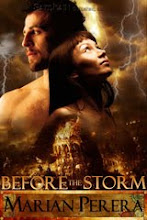
Yesterday I was looking at romance novel covers on other bloggers' sites, like this one from Viv Arend.
And that's when I realized that I actually prefer not to see the hero on romance novel covers. There's a preference for what's referred to as "mantitty" - marketing shows this, so of course cover art responds. At least it's better than Fabio, IMO.
But neither of them work for me, oddly enough. Maybe because the visuals of men I find hottest are the ones in my head? A reader's imagination is often more powerful than what even the best cover art can provide.
There are only a handful of heroes whom I did like seeing on covers, and even then one of them was only visible from the neck down. Plus, he was wearing a (buttoned) shirt and slacks.
On the other hand, I do enjoy seeing heroines on covers, so the intense gaze of the woman on the cover caught my attention. I especially love heroines wearing beautiful dresses suited to that time and place.
I fall into the second category, but found myself skipping several sections at the start of this book where Rand describes her philosophy of life (much as I did in Atlas Shrugged during John Galt’s speech, now that I come to think about it). It’s one thing to have controversial views on modern art or modern literature, but readers may be turned off by Rand’s views of Gertrude Stein or James Joyce.
…he uses words from different languages, makes up some words of his own, and calls that literature.
I wonder what she would have made of Tolkien.
The book does have its good points, though. Rand discusses using concrete terms and actions to convey abstracts such as character. She also shows the importance of theme, how this ties in to plot and how scenes can be constructed to express both.
For instance, two of her protagonists have a love scene just after a great and controversial achievement which has joined their careers. Both their success and the culmination of their attraction unite to give the scene even more impact. It was a good example of how to structure a plot to bring out drama.
My favorite part was the section on characters. Rand has been criticized – sometimes rightly so – on her characterization skills, but here she demonstrated an interesting technique. She rewrote the dialogue between two characters in The Fountainhead to show how much can be conveyed between the lines, even though the characters were in effect saying the same thing. The subtly altered dialogue gave an entirely different impression of the people involved.
There’s also good advice on using a present object or present event at the start of a long flashback, and then mentioning that object or event again at the end of the flashback. It should signify to the reader that the story is back in the present. But there were other suggestions with which I disagreed.
Do not use obscenities – and never mind all the arguments about “realism”.
There’s a time and a place for all terms, even four-letter ones.
By “journalistic references”, I mean the names of living authors, political figures, song hits – any proper names which pertain concretely to a given period. The rule is: Do not use anything of this nature more recent than a hundred years.
Two words: Stephen King. Rand’s argument is that the use of brand names and actual people will date the story, will anchor it too much in a specific time and place. But sometimes that’s the point. I don’t want to feel, when I pick up a Shopaholic novel, that it might as well be taking place in 18th century Tanzania. The setting, the historical figures, the styles, all those contribute to a spirit of place.
I like the abstract quality of Rand’s work, but I like the brand names in the Gossip Girl series too. That would probably have made me anathema to Rand, but so it goes.
Another problem is the frequent referring to Naturalistic vs. Romantic literature, and woe unto you if you’re on the wrong side. Rand’s novels, on the other hand, are portrayed as more or less perfect and consistently held up as examples of what to do, which can get a little wearying. A couple of exceptions, though: this book deconstructs two beautifully written descriptions by other authors and does so well.
In conclusion, The Art of Fiction isn’t for most people. On page 12, Rand even goes so far as to claim, “If to any extent you hold the premise of nonobjectivity, then by your own choice, you do not belong in literature, or in any human activity, or on this earth.” If you can overlook that kind of thing, and if you liked her novels or her philosophy to begin with, you might enjoy this book.
For everyone else, there are other books on writing where the authors don’t vote you off the planet.
Interesting coincidence, by the way: I’d wanted a copy of this book for some time, and I finally bought one on April 14. Later I read that on April 15, 1943, the first edition of Rand’s The Fountainhead hit the presses (after rejections from twelve editors).
******
Update on promotion:
Day 13 (April 18) : Created a profile on LibraryThing.
Day 14 (April 19) : No promotion. Hematology practical exam.
Day 15 (April 20) : No promotion. Hematology final exam.
And now the semester is done. Champagne all around!
Every time you think you’ve seen the ultimate in review abuse, something new comes along.
First I was amused by this article, which describes how a publicist dealt with the problem of a reviewer being too busy to read her client’s book. She sent some “mock reviews” that could be used instead. Two of those were “Great page-turner” and “Couldn’t put it down”.
Well, of course the reviewer would love her client’s book. And would express said love in the most tired and generic terms. Unfortunately the story had a less happy ending. As the reviewer described it,
So I turned back to her list of blurbs, which I had printed out. Unfortunately, they fell to the floor and were all mixed up. I tried to reconstruct them, but they got a bit garbled…
Here’s my best shot: “Don’t even think of page-turning anticipation!” ”Kept me up down.” “Filled with NY Times!” “Couldn’t put it near the water!”
Publicists should feel free to use them as needed.
That was funny, but the case of Robert Stanek is less so. Apparently he’s a self-published author who posted several hundred five-star reviews of his books on Amazon (and one-star reviews for some other writers).
Then a newsletter which mentioned Stanek received a vaguely threatening email from a lawyer claiming to represent him. Said lawyer sent it from a Hotmail account, “as used by the best attorneys” -- link. When a writer describes this as a “one-man PublishAmerica”, I don’t think it’s an exaggeration.
Clearly the originators, and perpetuators, of all this nonsense are enormous fans of George RR Martin… In prison, people like them usually get shanked.
That’s just disturbing, so let’s move on to the last and latest in the tales of review revenge. This hit the news today (and inspired my post).
A Cambridge-based academic found a scathing online response to her book on Russian culture, an Amazon review calling it “the sort of book that makes you wonder why it was ever published". The reviewer, who took the handle Historian, also trashed other books, including two by a professor at Oxford University.
In contrast, Historian loved a book by another professor, Orlando Figes, and expressed disappointment that he hadn't won a certain prize. The book which had won was "not nearly as good as its many plaudits in the press and book prize judges think."
According to Historian, anyway.
But the problem with picking on academics is that they’re really fond of doing research and putting the pieces together. Soon emails filled with formal fury circulated and the lawyers were summoned. Then the news broke.
The butler professor’s wife did it. And apparently she’s “a senior law lecturer at Cambridge University, barrister, and member of the top human rights specialists” -- link. How could someone so educated not realize that whoever was behind the reviews would be found out, discredited and maybe laughed at into the bargain?
Never a dull moment in publishing, that’s for sure.
Jane Smith, who runs HPRW and The Self-Publishing Review, is an experienced member of the Absolute Write forums, not to mention a writer, editor and a good friend. When I first contacted her about a guest post, I suggested "Five things phishing and literary scams have in common", because I didn't think my being published was enough of a splash to warrant a blog post by itself.
But Jane obviously saw it in a different light and generously offered to host both blog posts. Thanks again, Jane! You're the best. :)
Oh, and that's my promotional activity for today.
Well, apart from adding a page called The world of Eden to my website.
Why is it so hard? Because it is supposed to be. Being a novelist is the best job in the world, so it is – rightfully – the hardest job to get.*
I’d heard about this book before, but the numbers in the title intrigued me, possibly because they don’t give whole numbers when divided by 5.
That, and Pat Walsh, the author, clearly didn’t mind the possibility that some writers might be discouraged by the many reasons why their book wouldn’t be published. On the other hand, Mr Walsh is an editor, so he’s familiar with discouragement on both sides of the desk. 78 Reasons turned out to be an entertaining and mostly helpful read.
This book debunks a lot of myths, such as the idea that you need to have connections to be published. Much of the advice is great for writers who are starting out, and the section on finances, which explains managed risks and profit-and-loss statements, would be useful to anyone.
Mr Walsh is also blunt but clear on matters which won’t earn him popularity votes, such as certain topics just not being currently hot in publishing even if they are very important to writers (e.g. cancer). He stresses that all writers are not great at their craft and that no one has the right to be published.
That may reduce the book’s audience a little, but I enjoyed the direct style and especially the anecdotes on life in publishing. For instance, there was the writer who could have had a manuscript endorsed by a Pulitzer prizewinner, but spent so much time first editing and poring over the manuscript that the Pulitzer prizewinner died.
Not to mention the manuscript with many strange references which (the writer explained) were in-jokes about Samuel Johnson, who had nothing to do with the story. No, I couldn’t figure that one out either.
Great writers... know that biting criticism can hurt, but misguided praise can harm.
The advice is divided into sections based on writing skill (e.g. “You Have a Tin Ear for Dialogue”), publishers, agents and just plain bad luck. Finally, though, there are the 14 reasons to keep trying. Not for the overly optimistic or for anyone who prefers the easy validation of vanity publishing, this book is a good addition to a writer’s library.
*Then again, no cool-sounding job ever lives up to expectations. I once met someone who told me she worked for the circus. I asked, wide-eyed and eager, What is that like?
There is a lot of paperwork, she said.
Hey, it’s just like writing!
*****
Update on the giveaway : The winners of the giveaway for Glorious are Ebon Star and BookMarc Blogpants. Thanks to everyone who participated!
Update on promotion: Day 10 (April 15): Submitted an application to the Red Room.




 describes this, from race riots to natural disaster to the election of America’s first black president. I requested this book from Thomas Nelson and found it an informative read.


 will be of value.

 turned out to be an entertaining and mostly helpful read.
